Ben Lane Hodson
Writer, comic book creator, filmmaker, & musician
  • About
  • Books
  • Contact
  • Media Kit

Entertainment as a Comodity

May 22, 2014 By Ben Lane Hodson in Life Lessons, Movies

Entertainment as a Comodity

Does anyone else find it troubling that almost every commenter online and media pundit refers to a movie series, book series, or comic series as a “Property” or “Franchise”? Star Wars is spoken of as a franchise as if every joe-blo-entrepreneur is starting up a Star Wars fast-food joint in their town complete with Wookies hunched over the fryer, Stormtroopers taking orders, and Jawas on bathroom clean-up.

Star Wars is huge. It’s definitely a brand. The Star Wars brand sells products across countless markets but is it a “franchise.” The definition of a franchise is to sell a right to use a business model. Star Wars is a story with characters and lore. The word “property” might be a little better but it sounds wrong. Star Wars is fun, imaginative, entertaining but it’s surely not a business model.

But regardless of using a word like “franchise” incorrectly, what worries me much more is the immediate relating of an entertainment or art piece to being a “product.”

The Nature of Art

It’s a question asked by artists for hundreds of years:

Can art and product exist as the same thing? Does something cease to be art when it is mass produced? Is a piece of media art like a book, film, song, or comic less artistic when it becomes popular and a best seller?

There does seem to be an element of uniqueness in the way we perceive something as truly artistic. In human nature, the more of something there is, the less special, less meaningful we see it. The truth is that art by definition is completely subjective. Art is whatever you say it is. Simple as that.

Commoditizing Art

We’ve taken all the fun out of art. Everything is a business now. A sequel comes out to a successful movie and suddenly its a franchise. “With Zack Snyder at the helm, the Batman franchise appears to be in good hands.” How is Batman a business model? Why would we want our favorite character to be associated with a staple of consumerism like franchises?

Someone writes a great book or maybe just an awesome blog post and instead of talking about the work itself and its intrinsic artistic value, we say “that is quality content.”

Everyone is so consumer-focused that our entire entertainment system is about monetization and business value. Every Marvel movie is talked about as a “franchise.” Every successful comic series is a “property.” Every piece of writing is “content.”

I’d love to see those clinical words dumped in favor of more passionate, art-driven analysis that doesn’t just focus on the monetary value of a piece of entertainment. Money has its place in art but that doesn’t mean it should be the all-encompassing focus.
When is a Threat Too Big?

May 19, 2014 By Ben Lane Hodson in Writing

When is a Threat Too Big?

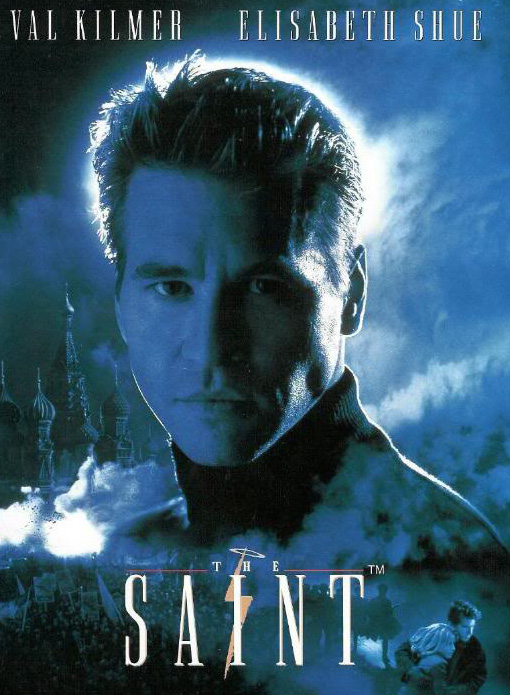
Anybody remember a little film from 1997 starring Val Kilmer called The Saint?

The Saint (1997)

The Saint (1997)

Kilmer plays a master thief that gets mixed up with the Russian mafia and finds himself on the run. It was actually a pretty cool movie until… about 3/4 into the film, the stakes change. We go from an interesting heist involving a secret formula for Cold Fusion to a Russian plot to take over the world by flooding the market with cheap energy. It was just unnecessary and pulled us out of this intimate game of stakes with characters we cared about into a meaningless worldwide crisis.

A few weeks ago, I tweeted:

Biggest cliche in genre films today: “the fate of the world hangs in the balance and only (insert character name) can stop it.”

— Ben Lane Hodson (@BenLaneHodson) May 3, 2014

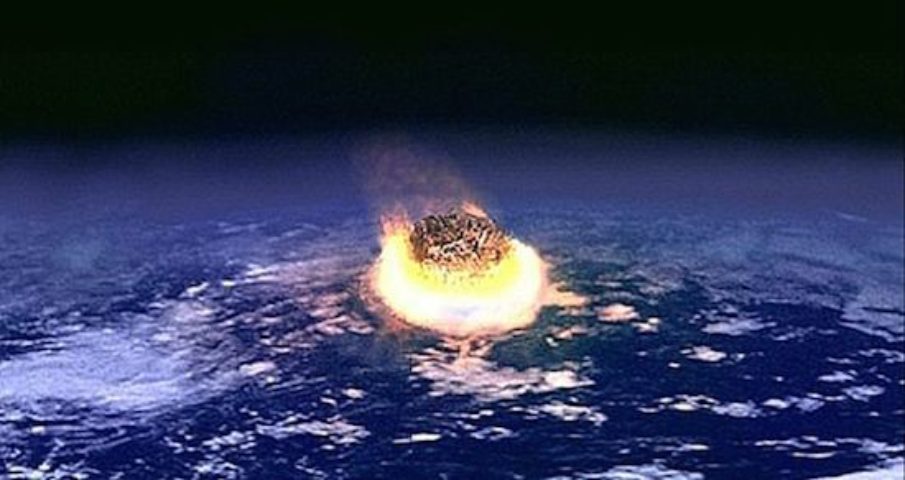
It’s happening across most media, books, comics, movies (although not so much for television which could possibly be one reason why TV is having such a renaissance). The stake meter is permanently set to 11. It’s like a hair dryer blowing in our ears. The world is always hanging in the balance.

The threat has become so over-the-top, so epic, that it loses all meaning. Nearly every big-budget movie has this same threat and it’s killing all suspense because we as an audience know, of course the world is not going to end (honorable mention to Cabin in the Woods though).

Other High Stakes

Don’t get me wrong. I get it. The stakes have to be high for characters. Every writer knows that. But can I just mention that there are some other stakes beyond the world ending that might be worth using instead such as:

Character Growth – Will the main character learn something new about themselves and become a better person or break under the pressure?

Two Tough Choices – The character has to make a choice between two options that both have dire consequences.

Ticking Clock – Will the character be able to solve the story problem before time runs out?

Interpersonal – Will the character lose the love/friendship/trust of someone close if they make a decision they feel they have to make?

Those are just a few ideas. Come on writers, let’s fix this broken record of a cookie-cutter plot design and give audiences something else to care about with real suspense.

3 Reasons Why the Movie: Transcendence Failed

May 15, 2014 By Ben Lane Hodson in Movies

3 Reasons Why the Movie: Transcendence Failed

On paper, Transcendence seemed like a sure thing. Starring Johnny Depp, produced by Christopher Nolan (of Inception and The Dark Knight fame), an interesting science fiction premise, and directed by Wally Pfister (the director of photography for The Dark Knight in his directorial debut). What could go wrong?

I read several reviews before I went to see the movie and most of the reviews were lukewarm or worse but I shrugged it off and went anyway because: how could Chris Nolan executive produce a film by his “go-to” director of photography that wasn’t good? Wouldn’t Nolan lend a hand if things weren’t going right?

Well, it appears Chris Nolan either left Wally Pfister to his own devices or was too busy working on Interstellar to make sure this movie was working because what we got was a huge letdown. What a disappointment. It appears Chris Nolan just called in favors to his usual actors and helped Wally get the film off the ground and…that’s about it.

What Transcendence did right

Cinematography – Wally Pfister has been the director of photography on Chris Nolan’s biggest films and it shows. The film is beautifully framed and shot.

Big Ideas – Somewhere in here was a great movie but unfortunately, the writers didn’t seem to grasp the implications of the science and I have to lay blame at the director’s feet for turning the big ideas into trivialities. At least they tried for big, compelling, timely, and interesting ideas even if they failed to communicate them well.

3 Reasons Transcendence Failed

Regardless of the few things the film did right, it got a lot more wrong:

1) Handicapping your actors – Johnny Depp (usually a huge Box Office draw) has very little to work with. His character is acted upon for the first half of the movie, not really making any choices on his own then spends the other half of the film as a robotic image in a computer with little chance to showcase his acting talent.

2) Pacing – there are some moments of tension and action but there are huge sections of the film where nothing interesting or clever happens. This is a directing problem and Pfister’s lack of experience shows most here.

3) Lack of tension – there are large portions of the movie where there is no threat / conflict or the conflict feels so obvious and contrived that we know within the first 5 minutes how the scene is going to end.

I couldn’t be more bummed to report this. I’m a huge fan of Wally Pfister as a DP. I so wished he had knocked his first film out of the park but he didn’t and I’m not sure he’ll get another chance.

International Box Office and what it means for the future of books

May 12, 2014 By Ben Lane Hodson in Books, Movies

International Box Office and what it means for the future of books

The U.S. domestic box office is no longer the place where movies win or lose. The international box office has become a force to be reckoned with and can be counted on many times to turn a struggling U.S. movie into a bone fide hit.

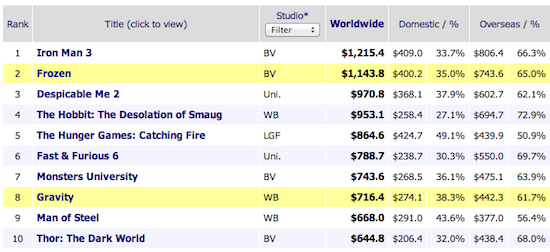
Here’s a breakdown of the top 10 movies in 2013 and where their revenues came from:

2013 bo

International Box Office

What’s really astounding this year though is a movie like Captain America: The Winter Soldier. It set new records in the domestic U.S. with an opening weekend of $90+ million but it did an additional $75+ million internationally the same weekend (and it was only in 32 markets, expanding to more afterwards). Not less than five years ago, a movie like this (with the word “America” in the title and a guy wearing red, white, & blue) would have done 80%+ of its revenue in the U.S. Now that gap is closer to 60% (U.S.) / 40% (International) and the difference is closing fast.

Many big summer tentpole films are opening Internationally first. The Amazing Spider-Man 2 had already been playing for several weeks internationally before it released May 2 in the U.S. Hollywood has caught on, the international market is big business and as movie studios put more and more money into fewer and fewer films, increasing their risk exposure to a big failure, international box office is making the difference.

What does this have to do with books?

Releasing a novel used to be all about the U.S. domestic market. It still is for the most part. But what’s interesting is that the book industry seems to be following a similar trend to the film industry. Books are lagging about 5 years behind in terms of the trends but we can expect books and especially eBooks to be huge internationally within the next 5 years. Markets like the UK and Germany are already exploding. Authors who can’t compete with the small number of books that the big publishers push in the U.S. are having huge success outside of the U.S.

How to take advantage of the international book market today?

Here are a couple of tips to make the most of your book’s international potential:

Negotiate your international rights separately for your book. Make sure you are giving your book the chance it deserves in alternate markets beyond the U.S. It might also be a good idea to get an agent to help you exploit foreign rights.

Translate your book for foreign markets. Joanna Penn wrote a great blog post about how to know what market your book would be best for.

Determine which genre your book is best for. Germany and the UK have tastes similar to U.S. readers but places like Turkey do better with educational non-fiction or romance novels for instance.

We are fast approaching the day when international book sales will exceed U.S. domestic. The world is getting smaller all the time and the ranks of readers are growing faster than ever worldwide.

Video Games and Later Behavior

May 8, 2014 By Ben Lane Hodson in Gaming 2 Comments

Video Games and Later Behavior

USA Today recently published an article about the effects of video games on behavior: Think you’re immune to video-game violence? Think again. There are some interesting questions raised in the piece and it’s worth a quick read.

A Passion for Video Games

It’s been a while since I had time made time for gaming. I love games and have spent many hours in online worlds, fighting bosses, and racking up achievements but for the past couple of years, every extra moment I have has been channeled more and more into creative pursuits (writing, making comics, filming, etc). I’ve also been a bit disenfranchised by the lack of innovation in gaming. I do make it a point to try out a lot of new games even for just a few minutes and I always read my Game Informer magazine each month to keep up on the latest releases and trends in gaming.

Gaming Studies

There have been so many studies on gaming and its effects that it’s hard to know what’s real anymore. Who to believe. One study says violence in games causes violence in real life while three more say the opposite. Others say gaming provides stress relief while still more say it causes anxiety and aggression.

Why this Study is Different

What’s interesting about this study is the sample size. Over 130,000 gamers were analyzed for this study. 381 factors were considered in the analysis and the big takeaway was:

“We found that violent video games unmistakably raised levels of aggression and heart rate, and decreased feelings of compassion toward others.”

I can accept that and tend to think it’s true even in my own gaming experiences but I’m not as clear on what the solution is. The article suggests we adhere carefully to the video game rating system (not a bad suggestion) but I wonder if the aggressive feelings are really a factor of the game’s violence or maybe have more to do with the difficulty and challenge the game presents which drives the player to focus and try harder to beat the challenge.

Either way, I’m glad we have studies like this and we are keeping an eye on the consequences. It’s something to keep in mind. There are many positive benefits of games that don’t get near as much focus and press and I’d like to see a little more balance as well.

Books are Judged by their Covers

May 5, 2014 By Ben Lane Hodson in Books, Writing

Books are Judged by their Covers

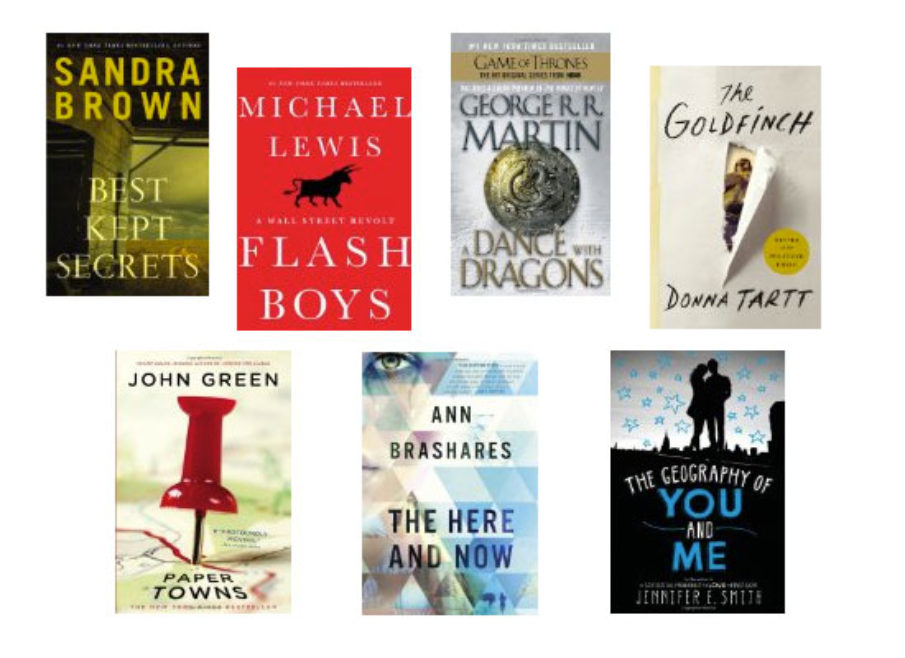
It’s obvious that book covers sell books above almost any other factor. In thinking about the cover for Tales of the Macabre West, I’ve spent a lot of time walking the shelves of bookstores, seeing what best selling covers catch my eye. The above screenshot is a sampling of a few covers I pulled off Amazon’s current best-seller list. All of these covers have a few factors that really set them apart and make them rise to the top of the shelves for me.

What makes a great book cover?

Here’s a few factors that make a book cover rise above the noise:

Thumbnails – Most people will never experience your cover in its full printed size. They will see increasingly smaller versions of it embedded on the web and throughout Amazon. If they download a sample, they will see a tiny image representing your cover (sometimes in black and white on the older Kindles). So your cover needs to work as a thumbnail. The title should still be readable. The image needs to be eye-catching even when shrunk down.

Get the “feel” across – The cover should convey & communicate the feel of the book and the style of the author. If the book is part of a series, the design should compliment and fit in with the rest of the books in that series.

Author branding – The author’s name should be clearly readable. If it is a known author, the name should be large, maybe even larger than the title.

Image & genre – The image on the cover should tell the reader what they’re in for, make them excited to experience the story, show them the fun they will have reading it.

Simple is better – A strong, simple image will be more powerful, grip the viewer faster than a complex design.

Typography & Font – Readability of the words on the book’s cover is one thing, a pleasant font that matches the style and design of the book is another. Less is more when it comes to typography. Getting too fancy is usually the first sign of trouble.

In the end, there’s an intangible that’s hard to describe about a great cover, it should be professional and eye-catching. If possible, using a professional designer will give you the best chance at something truly memorable. Regardless, it’s hard to get it right but when it’s right, you know it when you see it.

The Double-Edged Sword of Quality Writing

May 1, 2014 By Ben Lane Hodson in Books, Writing 2 Comments

The Double-Edged Sword of Quality Writing

I’ve been complaining and somewhat bummed recently after reading a string of poorly written and unsatisfying self-published books. I love reading and so each book I invest my time into that isn’t exciting, gripping, or at the very least, interesting is a huge letdown.

Well, I’ve got good news and I’ve got bad news. The good news is that I’ve read three books in a row these past couple of weeks that are excellent, that drew me in, that I didn’t want to put down. So what’s the bad news in that?

The downside of reading good writing

The bad news is that all of this great writing has depressed me in a different way. Instead of feeling bummed that I wasted my time, now I’m a little discouraged because these writers are SO much better than me. I want to write stories that are that great, that draw readers in so powerfully, that make you (as the reader) feel like you are the main character experiencing the excitement of the story.

Why you should read both good and bad writing

There’s benefits to reading both good and bad writing. You learn from both, either what or what not to do.

  • Different strengths: What’s interesting from these three great books I read recently is that very few authors are great at everything. Some are masters at setting or description, others are brilliant at pacing or plot, and still others are great at deep point of view character inner-dialogue.
  • Resurrect dead writing: Reading poorly written passages really helps me see why something isn’t working. Frankly, it’s more useful than reading great writing because it is very easy to read bad writing and not get into the story or characters (by definition).
  • Read as a writer: Reading good and bad writing with a critical eye, consciously thinking about what is working what isn’t, why it is or isn’t, noticing a great passage or cringing at a terrible paragraph makes me a better writer.

A New Motivation

After the initial wave of depression passed over me when I read these great books because of my own inadequacy as a writer, then the competitive side of me took over and I couldn’t be more excited to rise to the challenge. I know I have it in me to write great work. My writing continues to get better and I work on it every day and am more excited than ever to take things to the next level!

What Editors and Literary Agents Like and Loathe

April 28, 2014 By Ben Lane Hodson in Writing

What Editors and Literary Agents Like and Loathe

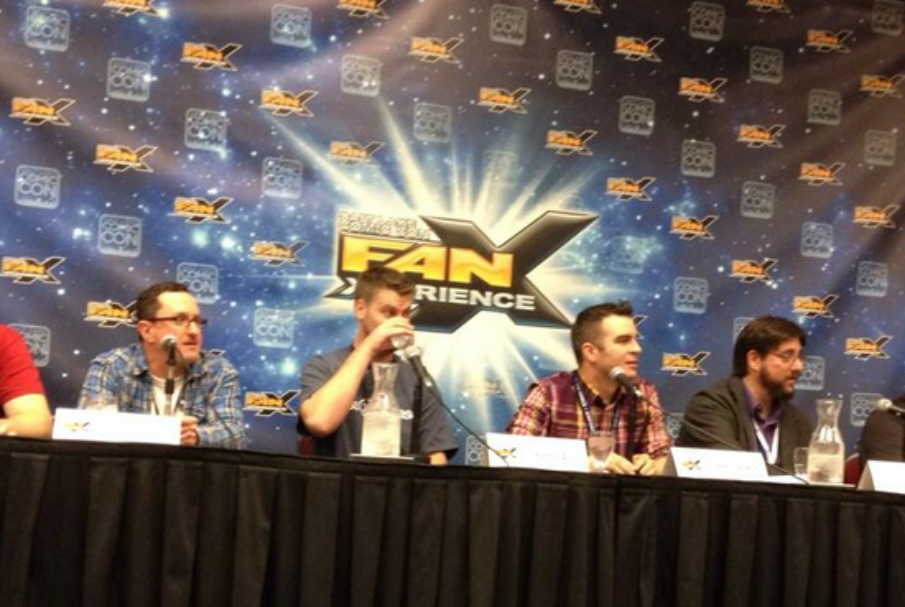
At Salt Lake Comic Con FanX this past weekend, I attended a panel made up of editors and literary agents from across the U.S. The panel allowed them each a chance to discuss what they look for in a query or submission, what they dread seeing, and how much they read before tossing it aside.

How much time do you have to hook an agent/editor?

In terms of how much time these editors and agents gave to a specific piece of work, the general consensus was very little. Some said they give one paragraph to get hooked, others said that was generous and that they only give one sentence. One editor said they give it a full paragraph unless the writing is so bad that they can’t stand to read further. Only one person said they read more than a few paragraphs.

What are agents/editors looking for?

Here’s a few of the comments agents/editors mentioned in regards to what they’re looking for in a piece of writing:

  • A really strong voice
  • A powerful opening sentence / paragraph
  • A likable character doing something interesting
  • An ending that surprises yet still fits perfectly with the story. Nailing the endings was a big concern for several on the panel. It sounded like they had passed on work they loved because the ending was such a letdown.
  • Is the character involved in making decisions in the story or are they just being acted upon by external forces?

What are some things agents/editors loathe?

Along with what they are looking for, there were some mentions of things these agents/editors despise:

  • An author that does not understand their genre
  • An opening paragraph that tries to gross-out the reader for shock value
  • Someone waking up, looking in the mirror, describing themselves, talking about their thoughts as they wander around a room

What do agents/editors do when they receive your query?

These agents/editors also talked about some of the first things they check on when they receive your query:

  • Check your social media presence. Do you have followers? Are you active on social media? Do you understand how to use social media or are you just spamming links to your books?
  • How prolific are you? Is this your first book or have you published other short stories, novels, comics, screenplays?
  • Is your cover letter easy to read or filled with long, dense paragraphs?

A couple of other comments were mentioned in regards to what makes a good query letter:

  • Get to the point as fast as possible.
  • Don’t put in your hopes and dreams. They don’t care about this. It isn’t relevant and wastes time.
  • Only include relevant credits such as literary awards or contests you’ve won. Leave out the other stuff.

It was great to hear from these gatekeepers and get a sense for what level the writing needs to be at to submit. Whether you are self-publishing or going the traditional route, making sure your work meets and exceeds these expectations is a must.

Remembering Verland “Bill” E. Bishop

April 24, 2014 By Ben Lane Hodson in Life Lessons

Remembering Verland “Bill” E. Bishop

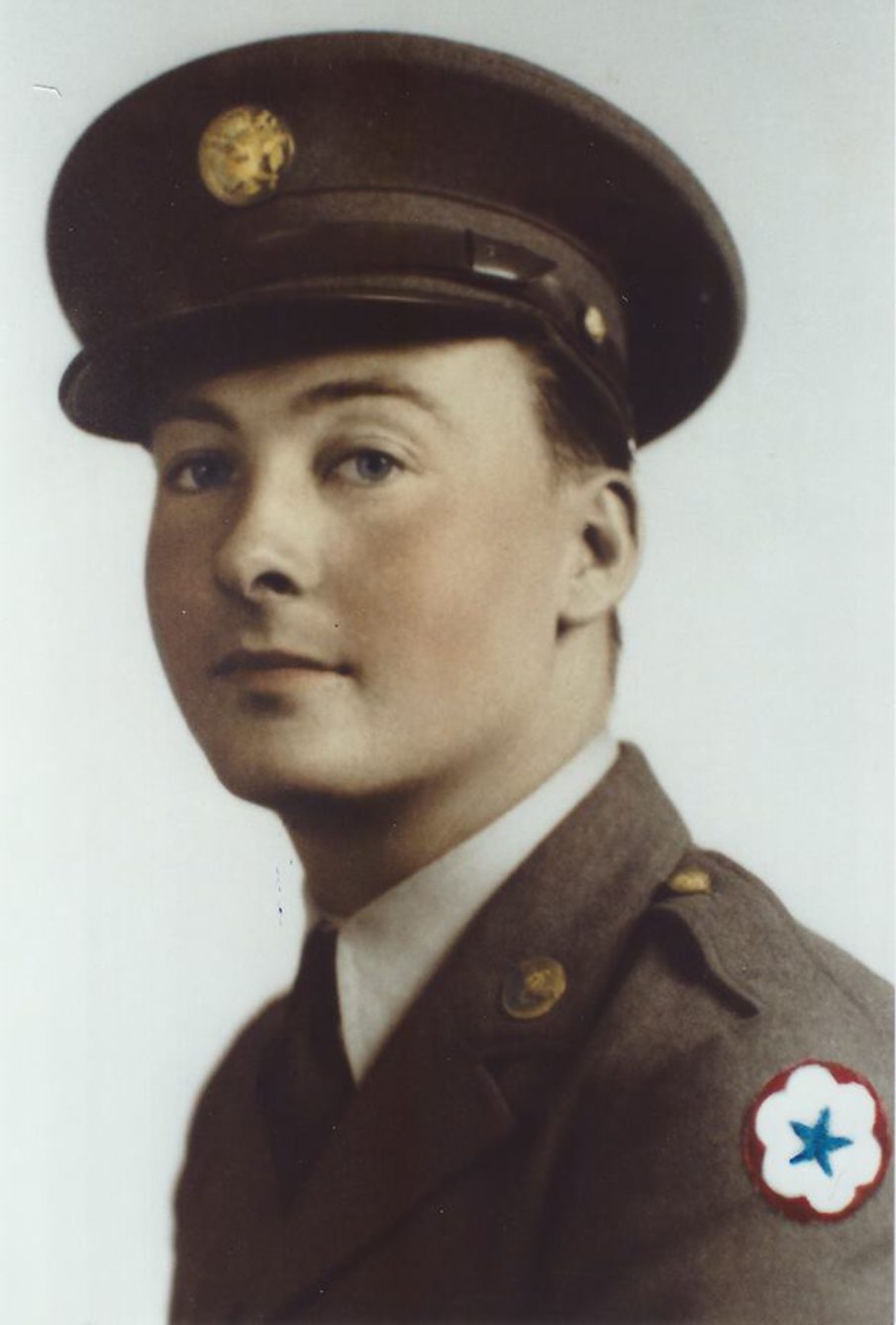
My grandpa passed away this past week. Verland E. Bishop, who liked to be called Bill by friends and family, was the only grandfather I ever knew. My grandpa on my dad’s side died in a sugar factory explosion when my dad was only 8 years old so I never knew grandpa Hodson.

Grandpa Bishop was in his 90’s and his health had been failing him these past few years. But despite those health challenges, you are never truly prepared to lose a loved one. He will be greatly missed and leaves a legacy of children and grandchildren that loved him dearly.

A Complex Man

He spent most of his life working as a paver operator, building roads in the Northwest. The paver moved slowly across the gravel and grandpa’s face became weathered from the punishing heat of the summers. The fumes of the tar and road chemicals effected his breathing and the extremely loud machinery greatly reduced his hearing capacity in later life. He suffered much from a distance that developed in conversations because he struggled to hear what was said. This only contributed more to his quiet nature. He was a deeply personal and private man.

When I was young, grandpa seemed stern and unapproachable but as I grew older, I realized there was a soft center inside of his tough outer shell. He and grandma never missed a chance to come visit, always supportive of my accomplishments whether it was a school graduation or a Christmas visit, they were always there.

Grandpa served honorably as an Air Force mechanic in Europe during World War II. One thing I’ll remember is grandpa’s not-so-sophisticated attitude towards other races, especially the Japanese. It wasn’t so much that he was filled with hatred to those of different races and cultures as much as he just had a lack of understanding towards them. If you’ve ever seen the movie Gran Torino starring Clint Eastwood, you have a pretty good idea of what grandpa was like. Ironically, grandpa’s assigned doctor was an Asian man which caused no small amount of consternation for grandpa. But just as Eastwood’s character had a surprising amount of heart and showed his love in his own way, grandpa had a similar tenderness behind that tough exterior.

Music and Creativity

One of the things I am so indebted to grandpa for is his belief in me. He gave me my first guitar. It was just something he found at a garage sale and thought I’d enjoy. I can honestly say I would never have learned to play guitar, write songs, play in all kinds of bands, and record several records if he had not done that simple act of giving me a guitar. Music is such a huge part of my life and whenever I play music, I think of him and that simple act of giving.

I’ll never forget the time we were visiting grandpa and I had my brothers with me and grandpa asked us to play something. We played a few Railyard tunes and I had a chance to tell him how important he was to my passion for music. The look on his face as we played and sang was a reward in itself.

That thoughtfulness continued to the end of his life. When my mom rushed to be at his side in his last few days, one of the first things grandpa asked her was how my book was coming along. He was always thinking of me, wishing me success, believing in me, supporting every creative project I was working on.

A Legacy of Memories

I can honestly say grandpa’s example of hard work and strength of character made me a better person and continues to inspire me. He had a tough exterior but underneath was a warm smile and loving heart. That’s how I’ll always remember him, pointing the way, cheering me on with an expression of confidence and affection.

Salt Lake Comic Con FanX 2014 Highlights

April 21, 2014 By Ben Lane Hodson in Comics 2 Comments

Salt Lake Comic Con FanX 2014 Highlights

FanX is done and I’m still recovering from the exhaustion of three days of pure fun and geeking out. There were big name guests in attendance like Patrick Stewart and Nathan Fillion. There were the stars of TV, comics, and pop culture. But the most amazing thing was the fans. Over 100,000 attended! In only one year, Salt Lake Comic Con is now the 3rd biggest comic convention in North America.

Here are some of the highlights from attending Salt Lake Comic Con FanX 2014 this past weekend.

Panels

I had a blast contributing on several panels over the three days of the show. Probably my two favorites were the session Cindy Grigg and I co-presented on different kinds of writing software and the Hitchcock panel.

I’ve posted the slides for Cindy and I’s presentation if you were unable to attend. The Hitchcock panel was just sheer fun. We had a panel of people that really knew their Hitchcock and everyone had some interesting insights on why Hitchcock still matters today. I had several attendees come up afterwards and tell me they were so excited to go home and watch a bunch of Hitchcock movies so mission accomplished.

In addition to being on several panels, I attended several sessions where some really interesting ideas were brought up. Here’s a few tidbits I wrote down:

  • In regards to conceptual design in comics, film, and video games, all the most expensive tools are meaningless if you don’t first understand the basics of design, form, anatomy, and composition.
  • In regards to sexism, women, and comics, the best way to help change things is by voting with your dollars. Stand up and ask publishers to be more respectful. Call out publishers that are being sexist.
  • On the Poe and Lovecraft panel, I learned that although Poe is known for his Morose poems and short stories, he was actually the first science fiction writer and pioneered the discipline of literary criticism. Also Poe is a good gateway drug to Lovecraft.

Costumes

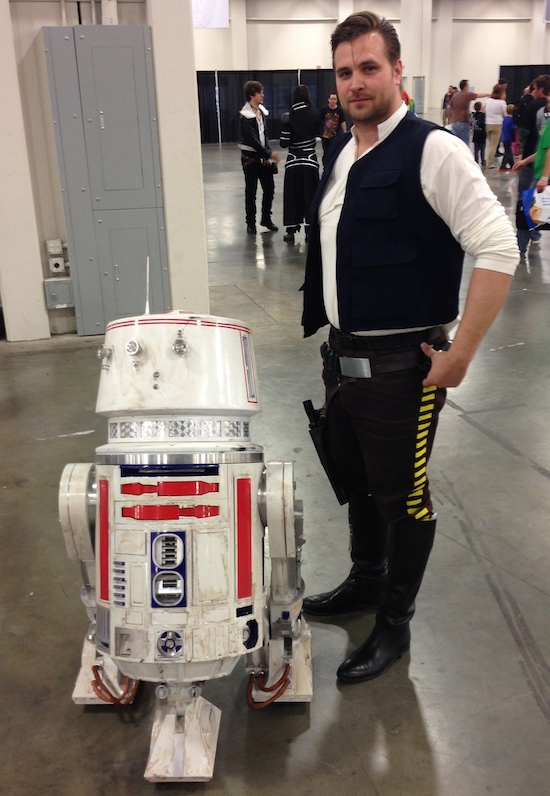
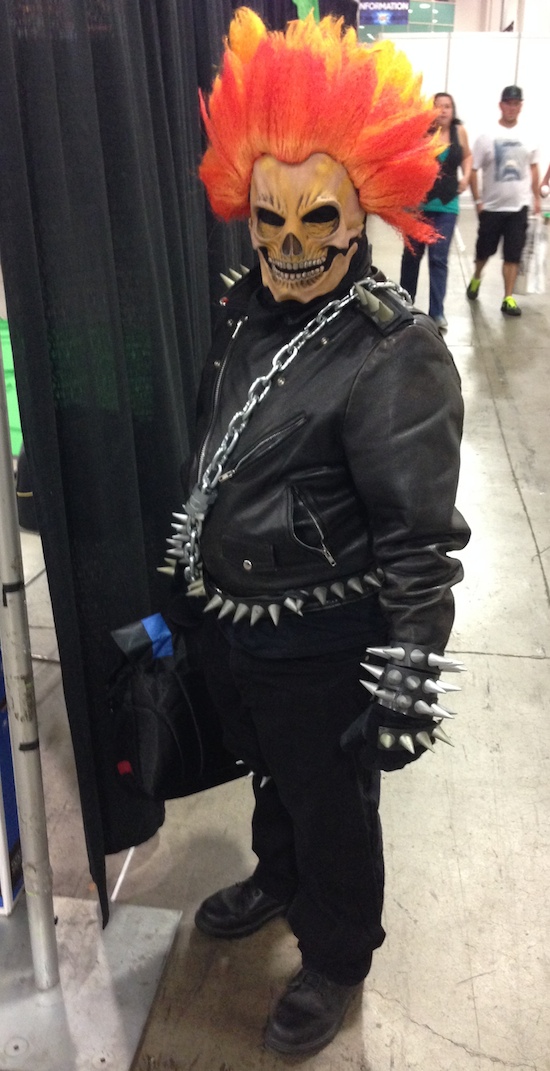
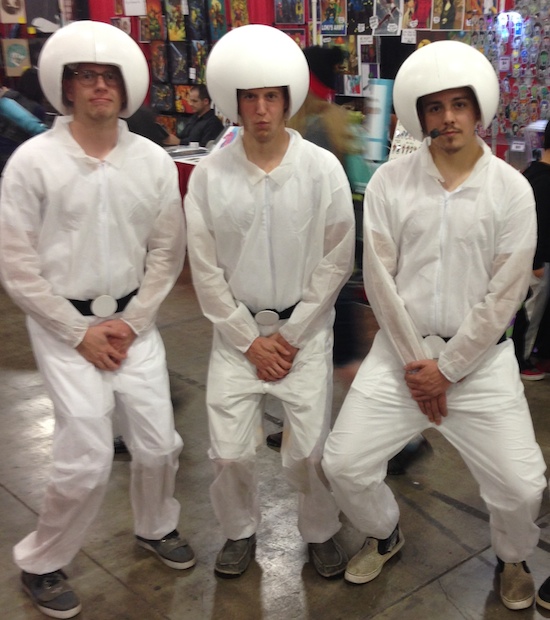
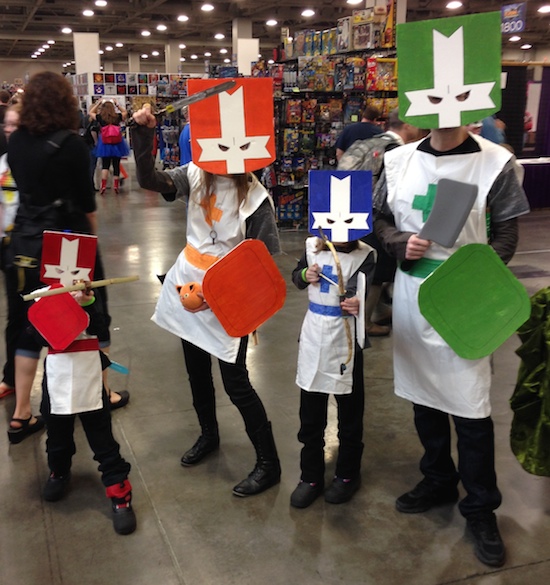
Here is a few of my favorite costumes that made an appearance at the Con:

Photo 371

Han Solo and droid.

Han Solo and droid.

Hardly ever see a Ghost Rider costume. This one is pretty clever.

Hardly ever see a Ghost Rider costume. This one is pretty clever.

Spaceballs - Even doing the Dark Helmet solute!

Spaceballs – Even doing the Dark Helmet solute!

Family of Castle Crashers.

Family of Castle Crashers.

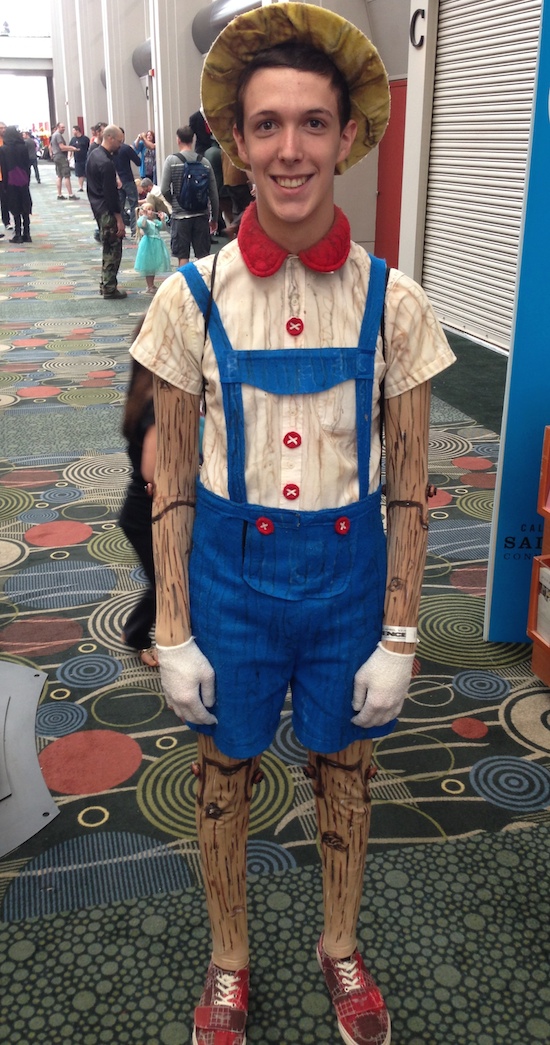
This Pinocchio was fun and cracked me up when he spoke in a high-pitched voice.

This Pinocchio was fun and cracked me up when he spoke in a high-pitched voice.

Floor Show

FanX is currently more of a pop culture, movies, and TV type of show. There are lots of vendors selling all kinds of prints of your favorite comic book characters and actors but very few comics. I’d love to see more comics longer term but the crowds are great and for a newer Con, they are making great progress. This show was SO much better run than even last year. Very excited with the prospects for future Salt Lake Comic Con’s.

«< 33 34 35 36 37 >»

About Ben

Ben Lane HodsonWriter, comic book creator, filmmaker, musician, entrepreneur, cook, software developer, hiker, surfer, & rock climber. Ben is the author of the Blood & Glory, Shutter, 8-Bit, and Bukeey comic book series. His new book, Tales of the Macabre West was published in December 2014.

Follow Me

Latest Book


My short story Little Bundle of Death was published in this anthology. Available in both paperback and eBook.
Buy it on Amazon.com

Ben’s Instagram

Recent Posts

  • Walking with the Dead: The Cinematic History of Zombies
  • My Experience using a Pebble Watch
  • Panel Schedule for Salt Lake Comic Con 2016
  • Supergirl: The Panel
  • The Slasher Craze of the 1980’s
Ben Lane Hodson
© Ben Lane Hodson 2026
Powered by WordPress • Themify WordPress Themes

↑ Back to top