Ben Lane Hodson
Writer, comic book creator, filmmaker, & musician
  • About
  • Books
  • Contact
  • Media Kit

4 Reasons Why Google Plus (Unfortunately) Still Matters

September 23, 2013 By Ben Lane Hodson in Tips & Tricks 2 Comments

4 Reasons Why Google Plus (Unfortunately) Still Matters

Wind sweeps over the parched and barren soil. A tumbleweed cuts a path through the arid valley. Buzzards hover around a scorched logo that reads “g+”.

We all know it. Google Plus is a ghost town, a wasteland of uncommented posts and orphaned hyperlinks. It wouldn’t even exist except that Google is basically “the internet” and most people’s email client as well. Have a Google account? Then you’re automatically signed up for Google Plus whether you know it or not. That’s why Google can claim almost 360 million users.

Why Google Plus Matters

But if no one is actually “on” Google Plus, why should I care about it?

Google still owns Internet search. They want their social network to flourish. So they’ve baked Google Plus into almost every other Google product. Want to track your searches and get more personalized results? You’ve got to use Google Plus. Want to use Google Analytics? You need a Google account first and what comes with a free Google account? You guessed it. Google Plus.

For better or worse, we’re stuck with Google Plus and you can’t afford to ignore it. Here are four reasons why Google Plus still matters:

1) Huge User Reach

Everyone who uses Gmail has a Google Plus account. Anyone with an Android phone or tablet has a Google account. They have 360 million users (I question their word “active” though as I know very few that actually use it). That being said, Google Plus is hard to avoid. Even if you ignore the site itself, you will get constantly barraged by notifications letting you know of other friends or suggested posts on Google Plus.

They do a great job of pulling you back in. So by posting to Google Plus, you can take advantage of this storm of notifications to get your message out to the massive Google audience.

2) Demographics

Using your Google Plus profile, Google knows a lot about you. They see what kinds of links and pictures you post. They track what kinds of posts you comment on. They track what you search for on Google.

Knowing this much about so many users allows Google to make their search even more powerful. If people with similar interests search for something on Google, they can provide much more personalized and targeted results based on that data.

Using Google Plus to share links to your blog posts for instance, will make it more likely that people looking for exactly your content can find it easily.

3) SEO (Search Engine Optimization)

Google created Plus to:

  • Compete with other social networks like Facebook and Twitter.
  • Improve their search results.

All that data they are collecting about their users is being analyzed by Google. Their search is then optimized to cater to search trends based on this data.

“Posting to Google Plus has a stronger effect on how likely people will find your page than posting to either Twitter or Facebook.”

4) Search Results Placement

Want your content to show up higher on the list of Google search results? You need to use Google Plus to post links to that content. Let’s say you created a blog post about “Yorkshire Terriers who wear dog clothes made of tinfoil.” First of all, that’s an amazingly bizarre niche. Second, if someone comes to Google and searches for “tinfoil dog clothing”, your post will most likely be found but it might be on the 3rd or 4th page of search results.

Putting a link to that blog post on your Google Plus page immediately makes it more likely that post could show up on the 1st page of results. It isn’t guaranteed but Google’s search algorithm gives preference to Google Plus content above other social networks.

“Your content is also more likely to get indexed (found by Google and put into their available search results) quicker if you are posting a link to that content on Google Plus.”

Why “Unfortunately”?

I say “unfortunately” because Google Plus is a hassle. Almost none of my friends are on there. The management tools are terrible. There is tons of “suggested posts” spamming my profile so it’s hard to even find other friend’s content when you are actually on there. I kind of wish it would just go away.

Regardless, it’s here and it’s an absolute must to use if you want to maximize your web traffic and search ranking. So I hold my nose, fight their poor social media tools, and post anyway.
The Zaucer of Zilk: Ingenius Comic Writing

September 19, 2013 By Ben Lane Hodson in Comics

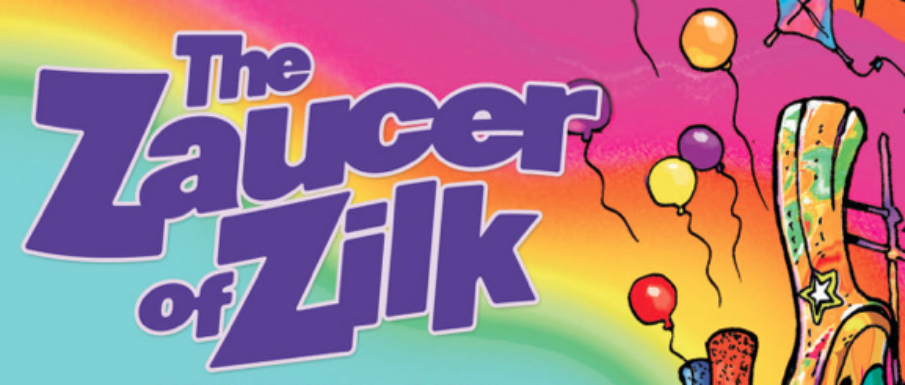
The Zaucer of Zilk: Ingenius Comic Writing

One of the first criteria I apply when experiencing a piece of art (whether it be writing, music, film, painting, or even comics) is:

“Show me something I’ve haven’t seen before.”

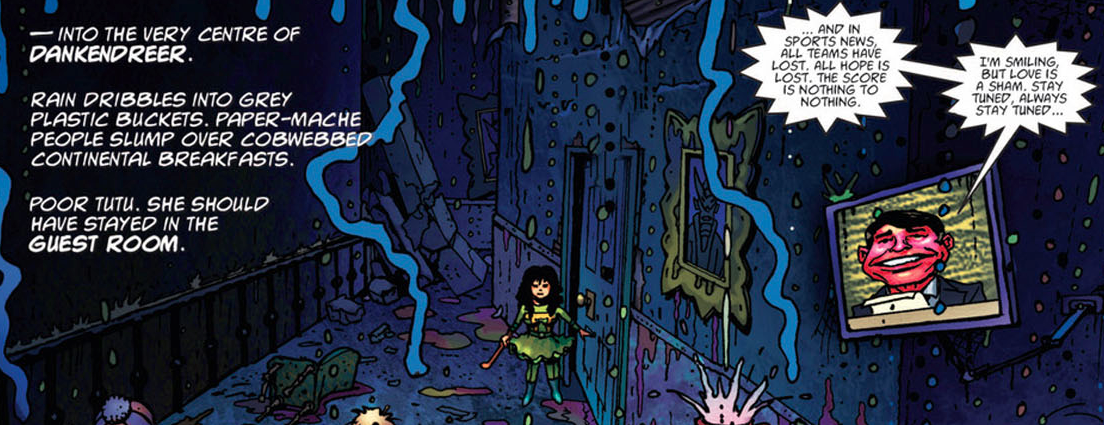
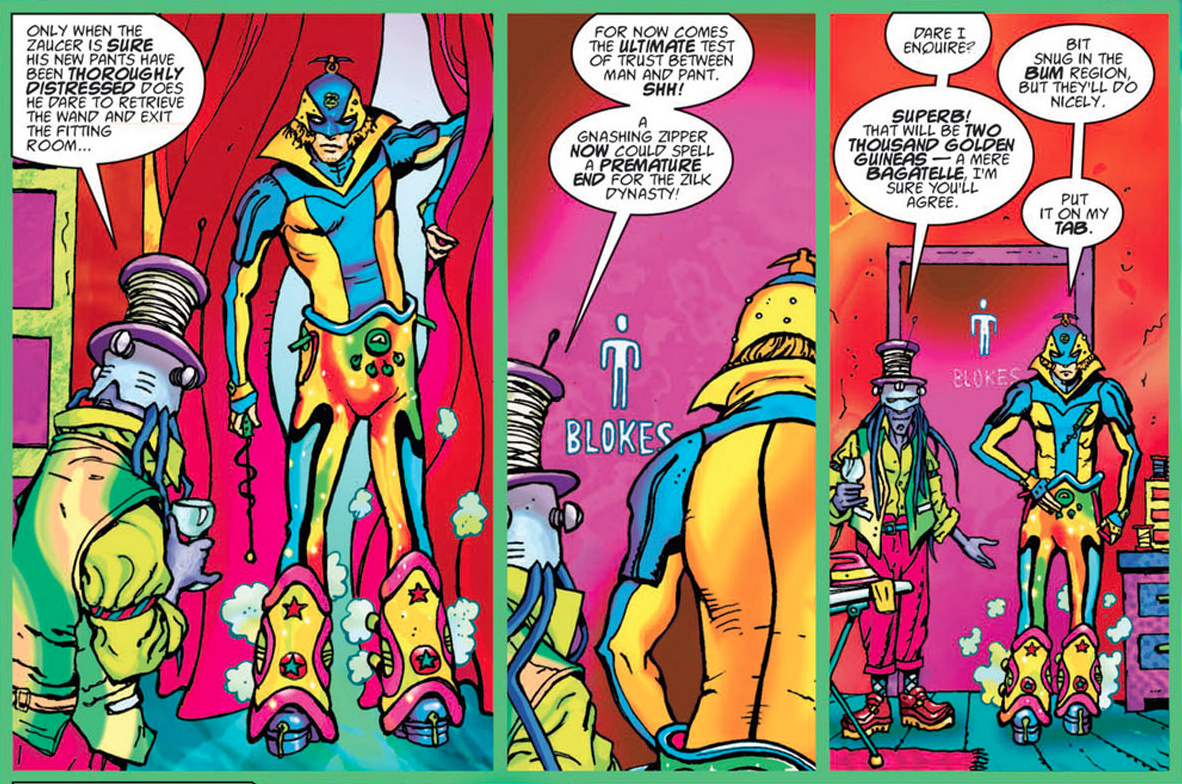
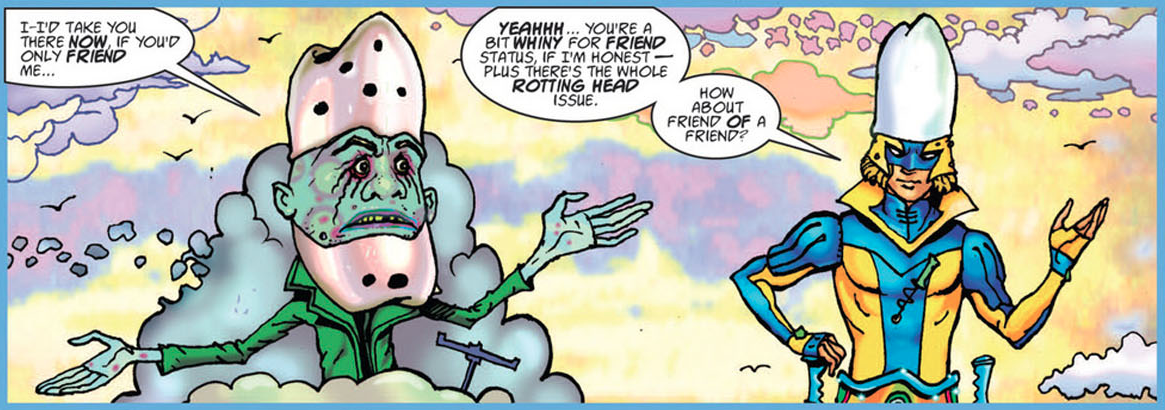
If the comic by Brendan McCarthy (2000 AD) and Al Ewing (Jennifer Blood) does nothing else, it most assuredly is something you’ve never seen before. But The Zaucer of Zilk is so much more than crazy pictures and self-aware dialogue.

unique

It’s Unique

You’re not going to find anything similar to The Zaucer of Zilk in comic shops. There are no hyper-sexualized super-heroines. No ultra violent hard-boiled crime stories. No superheroes that act more like super-villains.

What we get instead is a biting social commentary disguised as a hero’s journey following “The Zaucer”, a wizard who must save a fan from the evil Errol Raine.

social

It’s Social Commentary

The writing is brilliant. It’s on the same level as Alan Moore’s material. I use that comparison because Moore’s writing tends to work on multiple levels. He’s my favorite comic writer, always pushing boundaries, thinking far beyond the rest of the comic industry and McCarthy & Ewing’s work here is just as innovative.

Nearly every page provides a self-confident jab at popular culture. The book deconstructs our perceptions and norms. It calls into question trends and our mainstream value system.

fame

It’s About Fame

Our culture places popular figures on a pedestal.We follow their every move. A thousand may die due to an earthquake in a far away land but the top story of the day will be the birth of a popular movie star’s first child. It’s in this climate of “entertainment-reality” that Zaucer’s sarcasm really hits home. The Zaucer must cope with his adoring fans while on his quest. In fact, his quest is to save a fan that’s in trouble.

beauty

It’s Beautiful

The artwork is a cross between David Bowie’s Ziggy Stardust years and an Iron Butterfly record cover. It’s psychedelic. It’s bright and upbeat.

It’s weird. It’s totally insane. It’s a lot of fun. Highly recommended for those who are looking for something new and fresh.

Do Readers Need to be Talented Too?

September 16, 2013 By Ben Lane Hodson in Writing 2 Comments

Do Readers Need to be Talented Too?

There’s no question that talented writers can tell great stories. A writer who is truly committed to the craft will work to hone that skill through continual writing, challenging reading, expanded vocabulary, and a deeper grasp of grammar rules. All of this increased knowledge will allow the writer’s work to evolve to ever greater heights.

So why do I see advice to the contrary? We are told to shorten our sentences, leave out the “big” words, and in many cases “dumb down” the plot to make it more approachable. It’s made me wonder if the reader might be expected to put in a little work of their own. Does a reader need to have enough cognitive talent and grasp of the language to actually understand what’s being written?

Faulkner vs. Hemingway

No two writers are exactly alike. Some tend to short bursting sentences. Others pack the sentences with multiple layers in a dense writing style. One classic contrast is between Hemingway’s very straight forward prose and Faulkner’s heavy, sometimes impenetrable style.

Here’s an example from William Faulkner’s The Sound and the Fury

“When the shadow of the sash appeared on the curtains it was between seven and eight o’ clock and then I was in time again, hearing the watch. It was Grandfather’s and when Father gave it to me he said I give you the mausoleum of all hope and desire; it’s rather excruciatingly apt that you will use it to gain the reducto absurdum of all human experience which can fit your individual needs no better than it fitted his or his father’s. I give it to you not that you may remember time, but that you might forget it now and then for a moment and not spend all your breath trying to conquer it. Because no battle is ever won he said. They are not even fought. The field only reveals to man his own folly and despair, and victory is an illusion of philosophers and fools.”

And here’s an example from Ernest Hemingway’s A Farewell to Arms

“If people bring so much courage to this world the world has to kill them to break them, so of course it kills them. The world breaks every one and afterward many are strong at the broken places. But those that will not break it kills. It kills the very good and the very gentle and the very brave impartially. If you are none of these you can be sure it will kill you too but there will be no special hurry.”

Both contain emotional depth and though-provoking themes. Hemingway is easy to speed read. You might have to re-read Faulkner several times to get the main ideas. You may even need a dictionary handy to look up a few words along the way.

So which is better? Certainly, if you’re an author trying to write for the mainstream audience, the advice would be to avoid Faulkner’s style completely. In today’s book market, it would seem that even Hemingway’s more straight-forward style could use some streamlining.

HubSpot’s Content Reading Level Tool

Hubspot provides a tool that will read webpage content and tell you what reading level the content is currently written for. It can be useful when you’re writing for a specific market and want to know if you’re writing under or over your audience. You can find the tool here:

http://marketing.grader.com

Writing for the Masses (even untalented readers)

Unless you’re a writing elitist and don’t care if you’re ever read, you care about readers. Most of us are writing for the masses. We want as many people as possible to experience our stories and connect with our characters. Here are a few tips to help reach those readers:

1) Connecting with the reader is your job
It’s all about communication. Think of your reader giving you their full attention as you spin a yarn around the campfire. How would you tell the story to keep them engaged? When you spend time on exposition or long description, do you see them nodding off? Do you see their eyes light up when you get to the good parts? Why not cut out the boring stuff then?

2) Your purpose is not to teach vocabulary to the reader
People are going to read your work for enjoyment. They want to escape. They want something thought provoking. If they can’t understand what you’re saying because it’s over their head, where’s the fun in that? Use the right word at the right time. Don’t just search for synonyms.

3) Keep it flowing
Ever been reading along and hit a word you didn’t know? It’s kind of like a car hitting a wall at full speed. Maybe you steer and just barely avoid it but you keep looking back in the rear view mirror and you can’t focus on the road ahead. Using multiple uncommon words creates a virtual obstacle course for your reader so keep it flowing with everyday language.

4) Paragraphs & Whitespace
Use short paragraphs with five sentences or less. Break up dialogue with a paragraph for each character’s words. Make sure there’s a lot of whitespace on the page.

5) Focused Sentences
Make sure your sentences express one clear idea. Look for “and” to make sure you aren’t joining two separate ideas. Cut the clutter and stay focused.

6) Only vital description
Description should either set a mood, provide insight into a character, or make us feel something. Long description is typically one of the most common parts of a story readers skip. Why put it there if it is just going to be skipped? Get to the good stuff.

I’ve made my peace with the masses. I want to tell stories, not teach grammar. I want people to connect emotionally with my work. So I’ll be writing for the mainstream, using the tools available at that level, to craft a cleverly worded and well written story.

The Day I Lost Faith in Blizzard Entertainment

September 11, 2013 By Ben Lane Hodson in Gaming

The Day I Lost Faith in Blizzard Entertainment

In 2007, my brothers and I did a summer road trip. We visited two of the biggest nerd attractions of the year: San Diego Comic Con (Biggest comic book convention in the world) and BlizzCon (Blizzard Entertainment’s fan convention). It was like three geeks going on a pilgrimage to a kind of nerd “mecca.”

My Love Affair with Blizzard

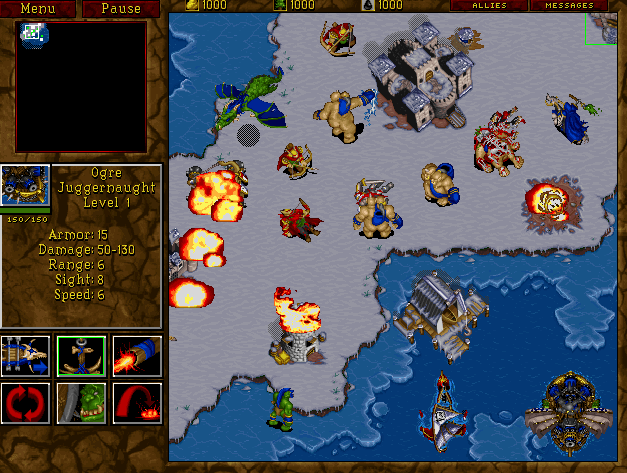
I remember playing Warcraft II: Tides of Darkness for the first time around 1996. We had two computers linked by a serial cable. I can’t begin to describe how amazed I was being able to play another person in a true strategy multiplayer experience. The armies seemed gigantic at the time as wave after wave of orcs and humans battled to the death.

Warcraft II: Tides of Darkness

Warcraft II: Tides of Darkness

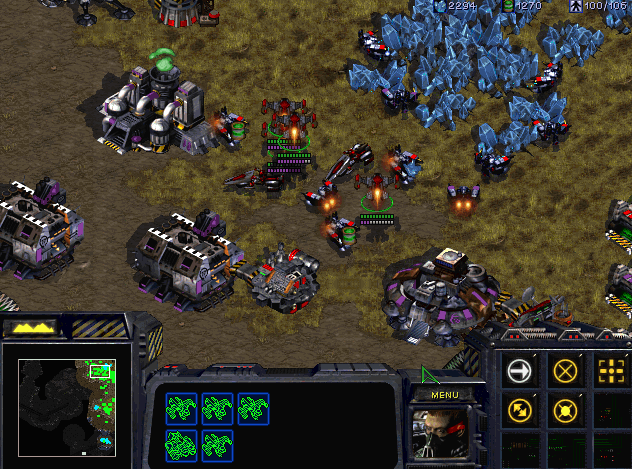
1998 brought the release of one of Blizzard’s masterpieces Starcraft. The unit counts were higher, the gameplay more polished, and now there were three races to choose from. But online multiplayer via Battle.Net gave Starcraft a staying power that keeps it going even to this day. Playing over local area network until the early morning hours on weekends proved that Starcraft continued to be fresh and interesting no matter how many times I played it.

Starcraft

Starcraft

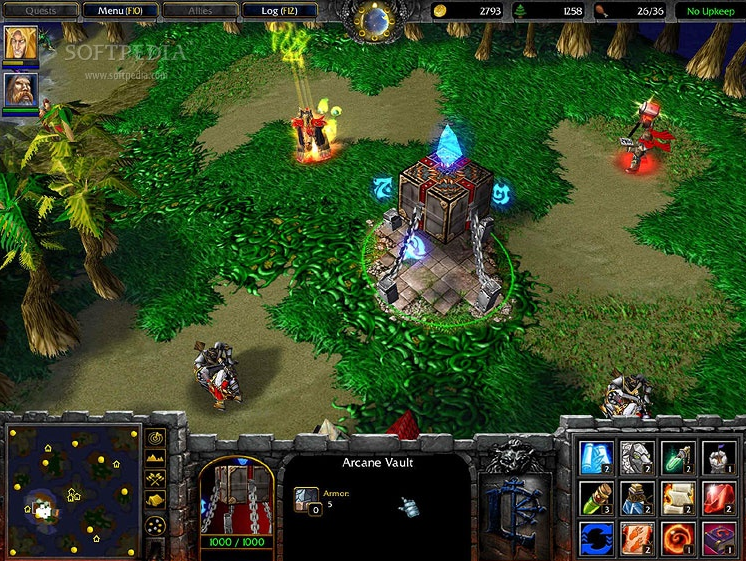
Then came Warcraft III, an absolute game changer. Whereas, an endless list of games had tried to capture the magic of Starcraft & Warcraft II by upping the unit counts and graphic quality, Warcraft III introduced an entirely new concept: heroes. Here came the ultimate “micro” game where you not only had to manage your armies but also manipulate your hero at the same time. It frustrated the die hard strategy players (who were used to the Starcraft strategy of “mass troops”) but the nuance of this game made it instantly my favorite. I even got so into it that I competed as a 2v2 team on Battle.Net, eventually reaching the top 100 best 2v2 teams in the world.

Warcraft III

Warcraft III

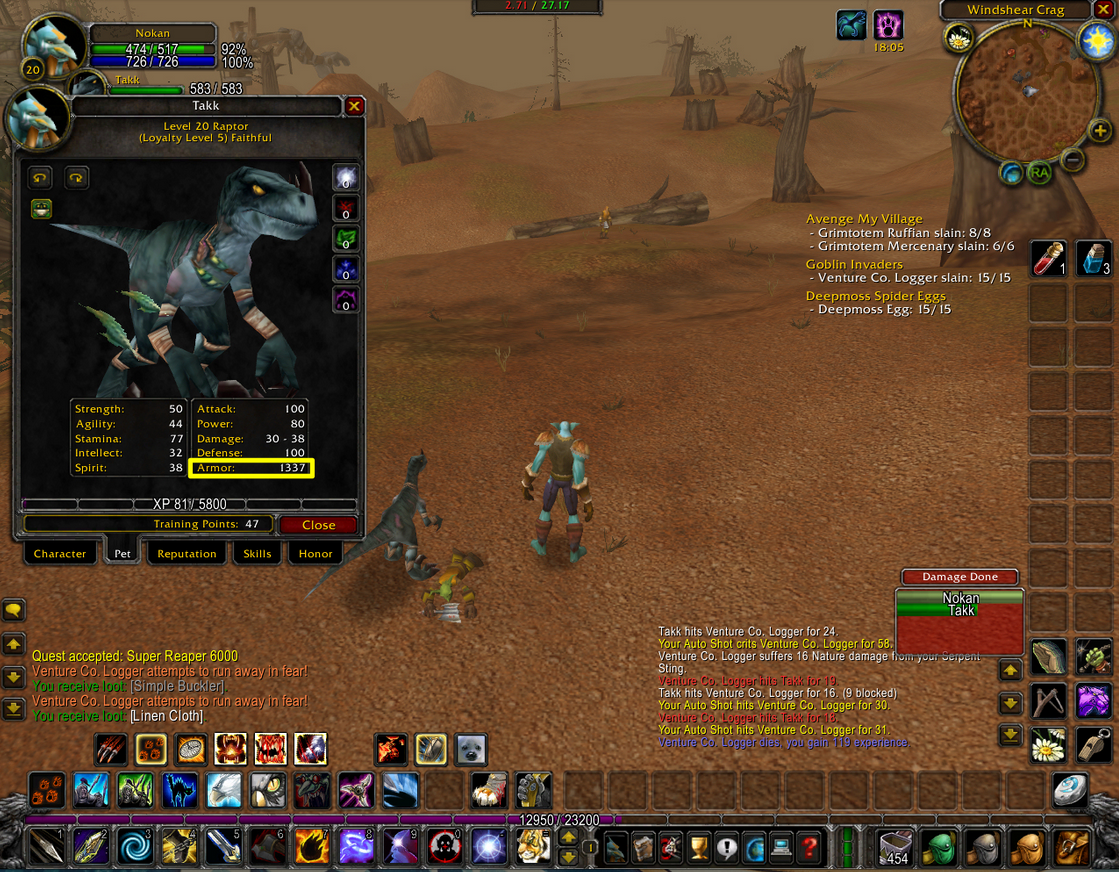
World of Warcraft finally made MMORPG (Massively Multiplayer Online Role Playing Games) work for the masses. World of Warcraft made the previous user benchmark of Everquest (around 200,000 players) look like a “beta trial” by bringing in over 5 million players in its first year. I reached level 60 within less than two months of the game’s launch. (Yes, I wasted a lot of time on that game but it was SO fun).

World of Warcraft

World of Warcraft

So it was at the height of my Blizzard excitement, that we walked through the doors of BlizzCon 2007.

Blizzard Drops the Ball

Looking back, maybe it was a question of expectations. I knew Blizzard had finally “made it.” They were rich beyond their wildest dreams. Surely, BlizzCon would be magical. Compared to my experience at San Diego Comic Con the week before (which had been absolutely mind-blowing – meeting James Hong, the Blade Runner 25th anniversary panel including Ridley Scott, etc.), BlizzCon was a let down of epic proportions.

I was so distressed by the experience I wrote an open letter to Blizzard on the CrankLeft blog. Here’s an excerpt describing SwordBoy’s (my brother’s character name in WoW) experience trying to play the Lich King demo:

Swordboy goes and waits in line for an hour to play the Lich King demo. He finally sits down and selects a level 70 character to play (No, you couldn’t play level 80’s). He starts walking around, trying to figure out how to play the Death Knight class. He chats on GENERAL. “How do we play the Death Knight class?”. “You don’t”, says another player on the channel. “Its not playable at the conference.” Swordboy: “Then what are we supposed to do.” “I guess just walk around.”

I am not even joking. Blizzard announces the Death Knight class, the new Northrend land, and all they let you do in the beta was walk around in a single zone with a fake level 70 character. No Death Knight, no Rune experimentation, no new spells, no new talents. Some new enemy models and lots of trees (basically more of the same for WoW). Swordboy is so pissed, he leaves before his 20 minutes are up.

If you have the time, this is a funny read. I can’t believe how upset I was. The sarcasm and animosity just drips from this post.

Things Haven’t Improved

Frankly, it’s all been downhill since that day. I continued to play World of Warcraft for a few more years. Expansions came and went but the game basically stayed the same. One day, I realized I had other things to put my time into. The shine had come off the coins spent on the subscription.

Starcraft II arrived and ended up being a let down. It looked great to be sure but where was the innovation? A few new races, better graphics, new play modes but in the end, they could have just released another expansion for Starcraft that did all of this. My son and I played Diablo III. It was fun for the first few hours but it suffered from the same issues as Starcraft II. Amazing graphics, some new loot, and player classes but little innovation.

Where Do I Go From Here?

I don’t hate Blizzard. I’m happy they’re successful. I’ll always love the truly innovative games they built. I’ll continue to buy their products because they’re high quality and fun. But I won’t expect them to be innovators. At least not like they were.

The Best Movie Trailer Ever – Dr. Strangelove

September 9, 2013 By Ben Lane Hodson in Movies

The Best Movie Trailer Ever – Dr. Strangelove

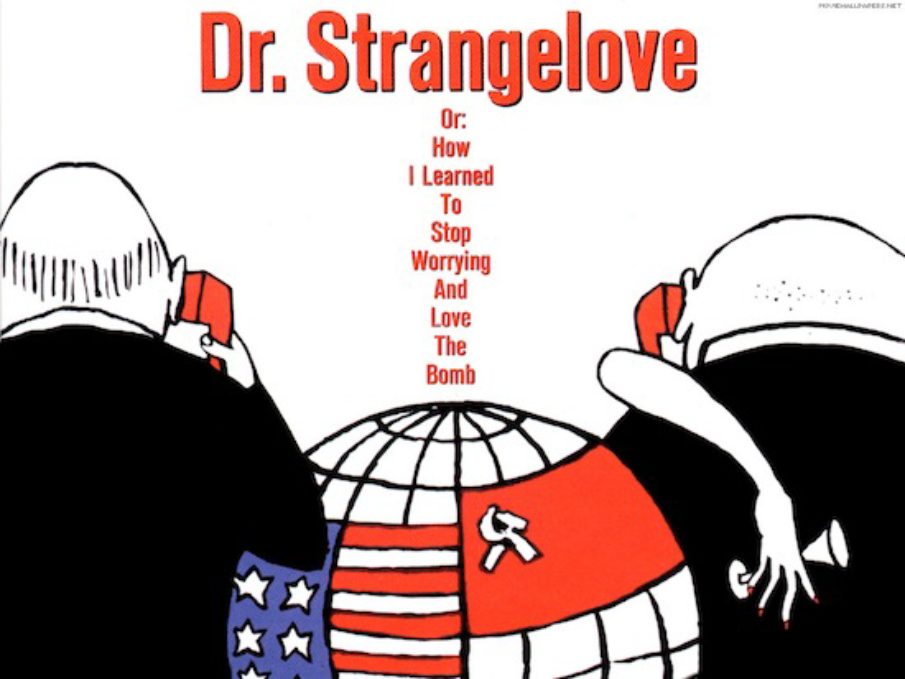
Not only is Dr. Strangelove or: How I Learned to Stop Worrying and Love the Bomb one of the greatest comedies of all time (also a thoughtful social commentary), it has the best movie trailer ever.

For those of you who don’t follow Stanley Kubrick’s (the director of Dr. Strangelove, 2001: A Space Odyssey, The Shining) work closely, Dr. Strangelove was the film that saw Kubrick really move into a different stratosphere as a filmmaker. While his previous film Lolita was edgy (especially for the time), Dr. Strangelove showed that Kubrick was capable of mastering any genre including comedy.

Many have copied the style of this trailer to varying degrees of success but nothing touches the original. Here it is in HD:

Admittedly, this trailer is even funnier if you’ve seen the movie. It does a great job of illustrating the absurdity of the film but the true brilliance in this trailer is that it also reflects the theme of the film (the absurdity of man being able to accidentally destroy all life on Earth through nuclear war). The comedy works on multiple levels and as is the case with the great comedies, it’s based on truth.

This was before the days of digital editing (1964). Think of how difficult it would have been to cut this trailer. All of the quick cuts, inline text cards, and sound cues had to be just right. Kubrick, being a perfectionist, undoubtedly spent endless of amounts of time getting things to line up exactly. There’s true craftsmanship on display here.

If you’ve not seen Dr. Strangelove in a while (or ever), it’s a must watch. The comedy holds up rather well even today. It’s worth it just to see Peter Sellers at a career high. I leave you with a picture of Dr. Strangelove that says it all.

Dr. Strangelove himself (Peter Sellers)

Dr. Strangelove himself (Peter Sellers)

A.A. Bondy – A Songwriter Worth Listening To

September 5, 2013 By Ben Lane Hodson in Music

A.A. Bondy – A Songwriter Worth Listening To

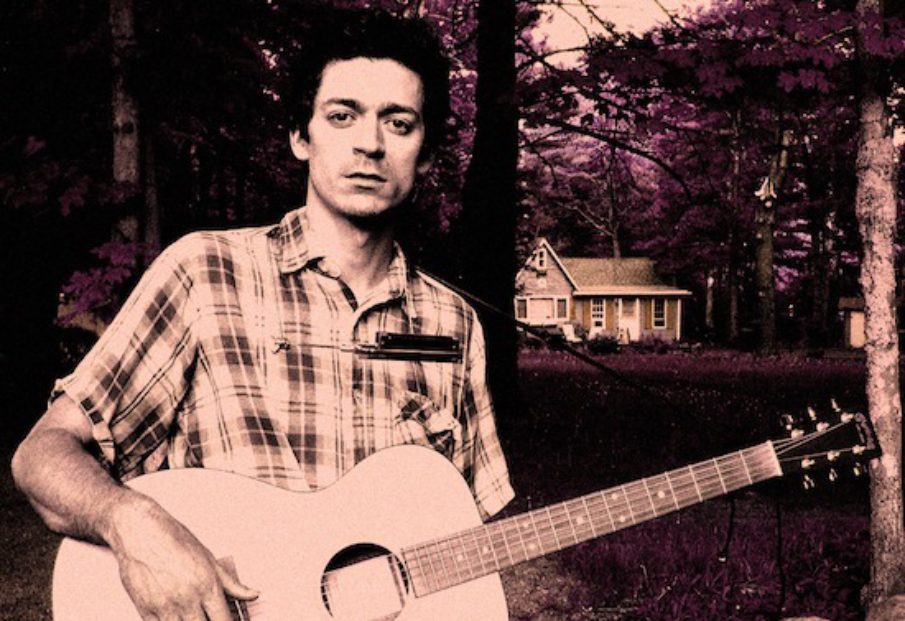
@RuralMurder told me about A.A. Bondy a few years ago. It was around the time A.A. Bondy was working on his second album “When the Devil’s on the Loose”. I listened to the first album “American Hearts” and I was absolutely blown away. Americana, folk, and old-style country all mix together with A.A. Bondy’s gravelly yet soothing vocals.

All three A.A. Bondy albums are great. My personal favorite is “When the Devil’s on the Loose” followed closely by “American Hearts”. You can get all of them on iTunes. “American Hearts” in particular is interesting because it was recorded in a barn near A.A. Bondy’s home in the Catskill mountains of Palenville, New York.

Here’s a track from “American Hearts” called “Black Rain.” The lyrics are fabulous. I’ve posted them below.

Black rain, black rain
Don’t fall on me
Can’t you see I’m doin’ my best
Black rain, black rain
Don’t fall on me
When I lay to take my rest

And love, it don’t die
It just goes from girl to girl
Town to town, rose to rose
All around the world
Like a ghost upon a breeze
In a land of elegies

Black rain, black rain
Don’t catch me low
And cover the sinner sun
Black rain, black rain
Where can I go
When you leave me nowhere to run

And love, it don’t die
It just goes from girl to girl
Town to town, rose to rose
All around the world
Like a ghost upon a breeze
In a land of elegies

Why your Blog Needs a Google XML Sitemap

September 2, 2013 By Ben Lane Hodson in Tips & Tricks

Why your Blog Needs a Google XML Sitemap

XML is short for eXtensible Markup Language. (I guess EML was already taken or maybe the “X” just made it sound cooler). So what is XML? Frankly, you don’t really need to know. What you do need to know is that Google uses XML to help it understand where all the content is on your blog and how to index it in their search engine.

If you’re interested, XML is a lot like HTML. It is a markup language that allows you to define data in a text format. The Google Sitemaps standard provides guidance on how to list all of the pages on your website, their titles, and their URLs (along with a bunch of other stuff). There’s a ton of info on Google’s help pages about Sitemaps if you’re well rested.

How Google XML Sitemaps Work

When Google’s crawler comes to your blog, the first thing it checks for is to see if your site has an XML Sitemap. Note that this is different than a Site Map page you might have on your site. This is a hidden file that your web visitors never see. This file defines the list of pages on your site. Google checks to see if there are any new pages since the last time they came. They also check your existing pages to make sure they are still there and to see if any of the content changed.

What’s a web crawler? Software that runs on its own without direct user action. It goes out to a website (such as your blog) and then reads each page it finds on the site. It follows links to other pages. Then it stores the information it learns about the content on those pages in Google’s index so that the next time someone searches for a keyword that matches something on that site, Google can recommend a page in their search results that is relevant to that keyword.

Why do I need a Google XML Sitemap?

If your website doesn’t have an XML Sitemap, then you’re making Google’s job much harder. It’s less likely all of your content will be found on your blog (unless it is bi-directionally hyperlinked which is very uncommon). Here are a few reasons to use a Google XML Sitemap:

  • So you can use Google Webmaster Tools (maybe I’ll write up a post about what this is later. For now, Google it if you don’t know).
  • To ensure Google finds all of the pages on your site that you want to be indexed in their search engine.
  • To tell Google if a page moved or does not exist anymore.

How do I Setup a Google XML Sitemap on my Blog?

Technically, you could hand code a sitemap using your favorite text editor but don’t. Unless you want a lesson in extreme pain, this is beyond ridiculous and extremely time consuming. Instead, find a plug-in or an app to do it for you. If you’re using WordPress, I highly recommend this plug-in:

Google Sitemap Generator
It works great. It’s totally seamless. It all happens in the background. And it makes you 100% compliant with the Google Sitemap Standard. Just install it and you’re done. It really is that simple.

Increase your chances of getting higher search rankings and make it easy for Google to always find all of your content by setting up a Google XML Sitemap. It’s one of those “techy” things you shouldn’t ignore.

Where are all the Dreamers?

August 29, 2013 By Ben Lane Hodson in Life Lessons

Where are all the Dreamers?

I wish I had been alive in 1969. I consider a man walking on the moon to be one of the greatest feats mankind has ever accomplished. Why have we stopped innovating on the big ideas? A good portion of the smartest people in technology spend their day devising ways to let us consume content faster whether it be Internet searches, computer performance, or social media.

The first part of the 20th century had so many big innovations that the later part of the 20th century and now the 21st has seen a backlash of innovation. Today, our risk averse society refines existing innovations instead of pioneering the big ideas. Today’s world looks like 1969 after a fresh coat of paint and a shrink ray. Our devices are smaller and our cars look more futuristic but they are built on the same fundamental innovations from the 1960’s. Mac OS X is built on a UNIX, a system that was developed in 1969!

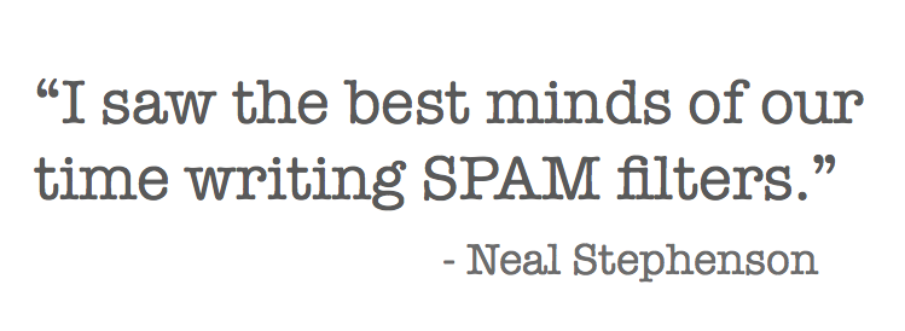
“The threat now is not too much innovation but rather not enough innovation.”

Neal Stephenson on Getting Big Stuff Done

Neal Stephenson, author of Snow Crash, gave a talk at Solve for X where he lamented our lack of ambition in science and innovation. I’ll be the first to admit Mr. Stephenson isn’t the most vibrant speaker but the things he has to say are powerful and important.

“A small number of people have to be willing to shoulder greater risks in order to create changes that eventually reduce risk for civilization as a whole.”

Bring back the space program. Find a cure for cancer. Build a flying car… Never mind. That all costs money. That takes effort and there might not be a payday at the end. Besides, somebody could get hurt or even die. Let’s just stay focused on making sure everyone can see their Twitter feed instantaneously.

Average Word Counts for a Book

August 26, 2013 By Ben Lane Hodson in Books, Tales of the Macabre West

Average Word Counts for a Book

The classic measurement for a printed book is 250 words per page. So 10,000 words yields roughly 40 pages of printed text. But over the years, font sizes, page size, and margins have become so diverse that it might call into question the classic measure. It’s especially suspect when discussing eBooks. Most reading devices allow the reader to change font size and because you can read on so many different types of devices, it becomes hard to even define what a book page means.

Average Story Lengths

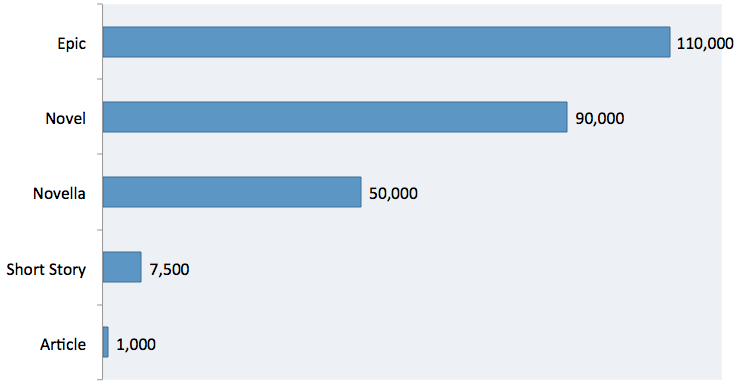
Writing World has one of the better approximate word counts for most common story formats. Using this and several other sources online as a guide, I came up with this chart to illustrate the difference between story types:

Approximate Story Word Counts

Approximate Story Word Counts

The sweet spot for a novel seems to be somewhere between 50,000 and 90,000 words. To me, 90,000 words is really pushing the line of a “pick up and read” book. Colleen Lindsay (who currently works for Penguin Books) has an awesome blog post discussing the “why” behind story word counts. It basically breaks down to this:

  • Novels that are longer than 90,000 words cost more to print (more printed pages increases the cost per book).
  • Longer novels are almost exclusively for published and established authors who have the flexibility to break the rules.
  • The general guidelines for the word counts on the graph above are actually more specific to a genre. For instance, a fantasy novel will typically be 25% longer than a mystery novel.
  • There’s also an interesting trend lately towards even shorter novels.

My word count goal for Tales of the Macabre West is 70,000 words (about 280 pages). I’m splitting the middle of the typical novel range. Technically, since it is a collection of short stories, it is more like 7 novellas that range between 5,000 and 13,000 words. I’m thinking 280 pages is a respectable number and honestly, there’s just no reason to pad anything. I want the stories to be tight, well-paced, and readable. But the above was helpful in deciding on when I was “done.”

I Turned Off the News and Felt Happier

August 22, 2013 By Ben Lane Hodson in Life Lessons

I Turned Off the News and Felt Happier

The 24 hour news cycle is killing me. Seven days a week, 365 days a year, news is delivered in the form of short attention span theater. It’s depressing. The good hearted, the charitable, and the positive are cast aside to make room for murderers, liars, and the sleaze of Washington D.C. It’s draining.

Network Predicted Our Future

I recently watched Network (1976) again and I’m shocked at how amazingly relevant it is today. The film is practically prescient in predicting where the media of the early 1970’s would inevitably lead us. If you haven’t watched it in a while (or ever), it’s really worth a view. An absolute classic.

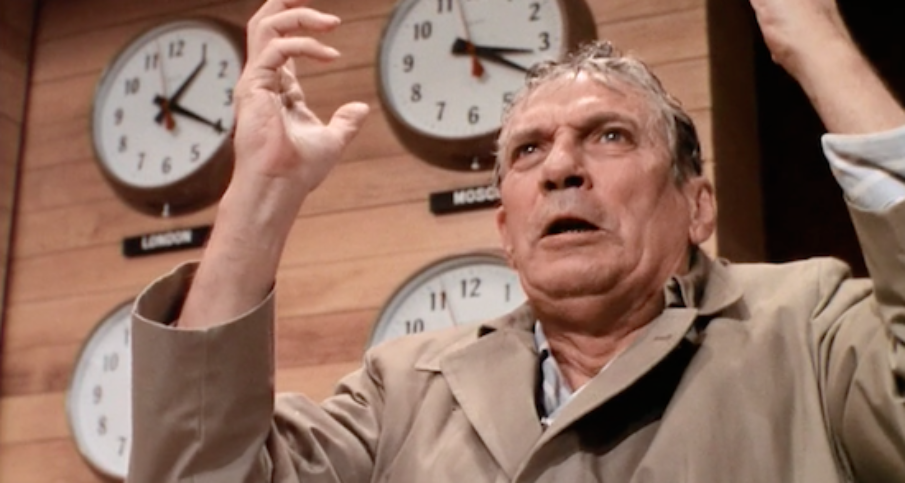
The main character is Howard Beale who goes a little nuts on national news one night and becomes an overnight sensation where he can say whatever he wants without censorship on his own television show. Here’s a sample of Howard’s advice:

Television is not the truth! Television is a damned amusement park! Television is a circus, a carnival, a traveling troupe of acrobats, storytellers, dancers, singers, jugglers, side-show freaks, lion tamers, and football players. We’re in the boredom-killing business! So if you want the truth… Go to God! Go to your gurus! Go to yourselves! Because that’s the only place you’re ever going to find any real truth.

News Cliches

Honestly, I think watching local news every night can drop your IQ. We get a story about a local rapist followed by a weather report that tells us what we already know and then cap it off with a heart-warming tale of a squirrel with one arm that learned to crack open acorns in spite of his disability.

And lord help us if there’s a winter storm warning. We’ll have a news anchor reporting from a wind tunnel, wearing a parka that looks like it belongs on a mountaineer climbing Everest. He’ll yell every word as he predicts our impending doom. Oh, and they always have to use the word “brace” as in brace yourself, the entire downtown area is bracing for the worst, the region is bracing for a blizzard, etc.

I think there must be software that spits out these news story titles. The rules go something like this:

  • Stories about a White House scandal must end in “gate”. Watergate was over 40 years ago people!
  • Stories about weather will use [The storm name] and the year like Winter Storm 2014.
  • Once a storm has hit, no matter how bad (or not bad) it was, we get the follow-up stories which all must include the word “aftermath”

For reporters, it seems there are only a limited number of phrases available. All other vocabulary appears to be banned for on air news reporting. So we end up with phrases like: gunned down, heated debate, outpouring of support, and every talking head’s favorite summary phrase “at the end of the day.”

More Howard Beale wisdom:

“We’ll tell you anything you want to hear, we lie like hell.”

The Experiment

It’s gotten to the point where I can’t even believe most things I hear. There’s so much propaganda and conflicting facts that I can’t tell what’s real anymore.

So I tried an experiment. I turned it off. I deleted my news apps from my phone. I exercised enough willpower to stay away from any current event-related websites. I ignored Facebook / Twitter updates that had even a hint of politics. At the end of two weeks, I knew nothing about the latest scandal, kidnapping, or economic news and you know what? I felt fine. In fact, I was happier. I worried less. I didn’t feel that the world was getting worse every day. I was more positive.

And what about all those scandals and “important” new stories from two weeks ago when the world was on the verge of collapse? Funny enough, there wasn’t a mention of them when I checked the news today. They had come and gone. Maybe I didn’t need to know about them in the first place.

I finally realized why Howard Beale was “mad as hell and not going to take it anymore.” News makes you mad. It shows you all the bad with none of the good. It’s a constant barrage of negativity.

I know I can’t just bury my head in the sand and ignore current events but I’ll be honest…I kind of want to. I just need to take news in smaller doses from now on and always remember that no matter what happens, life goes on.

«< 39 40 41 42 43 >

About Ben

Ben Lane HodsonWriter, comic book creator, filmmaker, musician, entrepreneur, cook, software developer, hiker, surfer, & rock climber. Ben is the author of the Blood & Glory, Shutter, 8-Bit, and Bukeey comic book series. His new book, Tales of the Macabre West was published in December 2014.

Follow Me

Latest Book


My short story Little Bundle of Death was published in this anthology. Available in both paperback and eBook.
Buy it on Amazon.com

Ben’s Instagram

Recent Posts

  • Walking with the Dead: The Cinematic History of Zombies
  • My Experience using a Pebble Watch
  • Panel Schedule for Salt Lake Comic Con 2016
  • Supergirl: The Panel
  • The Slasher Craze of the 1980’s
Ben Lane Hodson
© Ben Lane Hodson 2026
Powered by WordPress • Themify WordPress Themes

↑ Back to top