Ben Lane Hodson
Writer, comic book creator, filmmaker, & musician
  • About
  • Books
  • Contact
  • Media Kit

LTUE 2014 – 6 Writing Epiphanies

March 17, 2014 By Ben Lane Hodson in Books, Tips & Tricks, Writing

LTUE 2014 – 6 Writing Epiphanies

I took approximately 20 pages of notes at LTUE. I attended 24 sessions on various writing topics over three full days. Along the way, something was bound to jump out to me. After scanning back through my notes, I noticed several scribbles that were starred to remind me to not forget. So here’s a few of the biggest realizations I had at LTUE 2014:

ePubs are just HTML

This was a revelation for me but it makes perfect sense in hindsight. ePubs are just made up of HTML, images, and fonts. It’s super straightforward and since I know HTML, doing the formatting on my eBooks is not only doable but is also going to probably be fun. I learned a ton about using Sigil to format an ebook and the in’s and out’s of using custom fonts, images, and layout.

There are no rules for the process of writing

I’ve been looking for magic bullets for a long time but it occurred to me during a session on writing preparation that there are no hard and fast rules for “the best” process to write a book. The best advice given was to just try LOTS of things (in fact, try as many different techniques as possible) and find the techniques that work for you.

Romance payoffs are when a wall is breached between two characters

I went to a romance session… Let me give you a moment to pick yourself off the floor… Okay, so ya, this romance panel was great. Even if I never write a purely romance book (although I’ve been threatening lately), I want to have some kind of romance or at least romantic connection between characters so I went to learn more. The biggest take away for me was realizing that romance is all about tension and then release. The release is the payoff and comes when the two characters breach another romantic wall between each other.

Never put a scene in your book that you don’t absolutely love

Or another way to put it is leave out the boring stuff. If you don’t love the scene, don’t think it’s fabulous, can’t live without it, then it either needs to be reworked/rewritten or cut. Simple as that. If it’s awesome, keep it. If it’s lame, lose it. It really isn’t more complicated.

Studying the craft of writing while writing ups your word count

Attended a really interesting class about writing and how your brain works. What they showed through a number of studies and tests is that writers who study the craft of writing (reading books on writing, deliberate practice, taking classes) improved both their writing and their word count, no matter what level of a writer they were. So I have been studying writing more specifically while working on my book to take advantage of this.

The future of making money in writing is diversification

It’s not about just the paper book anymore. Besides the obvious eBooks, there are many other avenues to use the same writing in different formats such as audio books, international releases in alternate languages, film adaptations, and mobile apps. These are all additional revenue streams using the same piece of work.

Bonus thought:

Every single sentence needs to pop. Every single paragraph needs to entertain.
Best Twilight Zone Episodes – Five Characters in Search of an Exit

March 13, 2014 By Ben Lane Hodson in Writing 2 Comments

Best Twilight Zone Episodes – Five Characters in Search of an Exit

Five Characters in Search of an Exit is my second favorite Twilight Zone episode of all time. When I saw this in reruns as a kid, I was speechless at the twist ending. My young mind had been so wrapped up in the character’s plight to figure out who they were and where they were that I could hardly comprehend the brilliance of the ending reveal.

Every time I watch this episode, I wish I had been clever enough to write it. Seriously, I aspire to one-day write something this brilliant. A true teleplay masterpiece.

Synopsis

An army major awakens in a small room with no idea of who he is or how he got there. He finds four other people in the same room, and they all begin to question how they each arrived there, and more importantly, how to escape.

Why this Episode is Great

 The clown
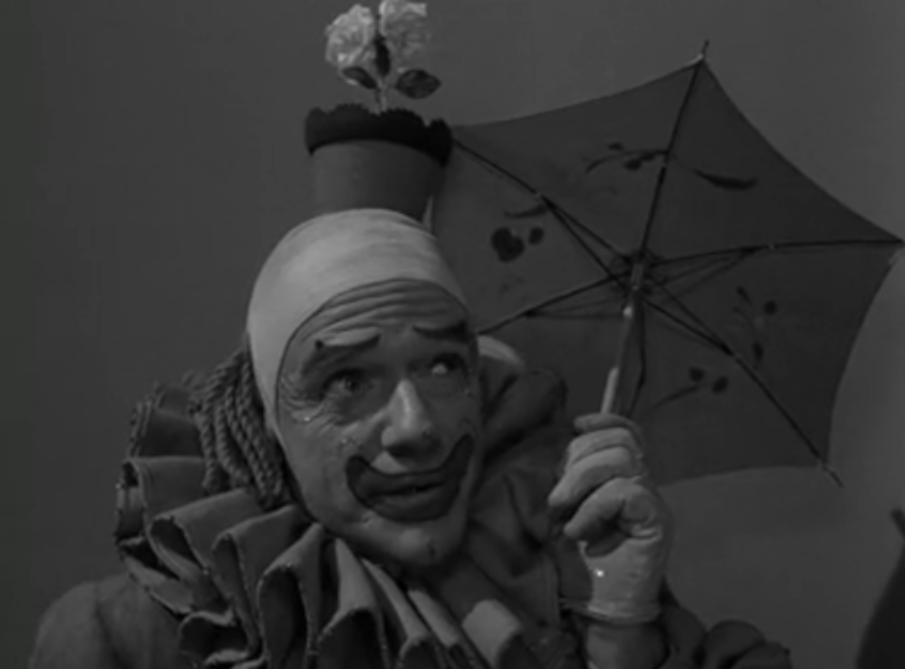
Murray Matheson plays the clown, a strange, riddling jester who turns the idea of the clown as a buffoon on its head. He’s both creepy (as would be expected in an episode written by Rod Serling) and insightful. He provides much of the existential puzzling that elevates this episode to the stratosphere.

Rod Serling’s Twist Ending
Serling is notorious for fabulous twist endings. He was a master of using audience expectations against them and this episode is a prime example. He uses a great deal of cunning to make that last scene so heartbreaking and jaw-dropping. At any point, the whole premise could have fallen apart but he walks the perfect tightrope in getting us to the mind blowing ending.

The acting
All the characters put in spectacular work here (with the exception of the bag piper who seems a bit wooden but honestly, he wasn’t given much to do anyway). Particular standouts are the Army Major played by William Windom and the ballerina played by Susan Harrison. As was typical of that era, over-acting was common and Windom’s performance is sometimes over-the-top and yet it works so well here.

The script
Rod Serling’s teleplay is actually a riff on a 1921 Italian play called: Six Characters in Search of an Author. What’s interesting though is how Serling used the updated setting and characters to make a point about existence, identity, friendship, and belonging. It works as both a great, mystery-driven story and an analysis of the human journey.

Opening Narration

Clown, hobo, ballet dancer, bagpiper, and an Army major – a collection of question marks. Five improbable entities stuck together into a pit of darkness. No logic, no reason, no explanation; just a prolonged nightmare in which fear, loneliness, and the unexplainable walk hand in hand through the shadows. In a moment, we’ll start collecting clues as to the whys, the whats, and the wheres. We will not end the nightmare, we’ll only explain it – because this is the Twilight Zone.

You can watch the full episode on YouTube here: Five Characters in Search of an Exit

Other posts in this series:

Best Twilight Zone Episodes – Third from the Sun

Best Twilight Zone Episodes – The Hitch-hiker

LTUE 2014 – Ways to Make Your Story More Interesting with Turns

March 10, 2014 By Ben Lane Hodson in Tips & Tricks, Writing 2 Comments

LTUE 2014 – Ways to Make Your Story More Interesting with Turns

John D. Brown gave a presentation at LTUE about Story Turns. His full presentation is available on his website at: http://johndbrown.com/2014/02/ltue-presentation-materials/  You can also find John on Twitter and Facebook.

His presentation titled: Story Turns gave some great advice on ways to make your story more interesting by adding twists and turns. Here’s a summary of some of the notes and interesting things I picked up from the presentation:

Purpose of Story Turns

  • Grab the reader’s attention
  • Make the reader want to turn the page
  • Control the pacing of the story

We want to make the reader curious, hope and fear for the character, and anticipate that something dramatic is going to happen.

What do Story Turns do?

  • Raise a question in the reader’s mind
  • Extend a question the reader already has
  • Answer a question the reader’s been wondering about

Things to Keep in Mind with Story Turns

  • The Beginning and Ending are two of the most important turns in the story
  • Use your scene structure to guide where your story turns should be
  • Surprise your reader. Turn their expectations in the opposite direction
  • Story turns drive pacing, NOT short sentences

Story Turn Techniques

John gave a great list of Story Turn techniques. Here’s a couple that I particularly liked:

  • An obstacle worse or different than expected
  • A threat the reader thought was eliminated comes back
  • A time limit is introduced
  • A question or mystery is posed
  • A character acts in an unexpected way
  • The protagonist’s solution is wrong

Definitely worth checking out John’s whole presentation from his website. Some great insight.

Bukeey Issue #2 Preview

March 6, 2014 By Ben Lane Hodson in Comics

Bukeey Issue #2 Preview

Super excited! Bukeey Issue #2 will be released on March 28, 2014 at the Emerald City Comic Con. Bukeey is the comic series that Chad Bever and I have created. I do the writing and he does the art. For those of you who haven’t experienced the fun that is Bukeey, its a comic for younger readers (ages 5 to 12), about a buffalo boy and his animal friends.

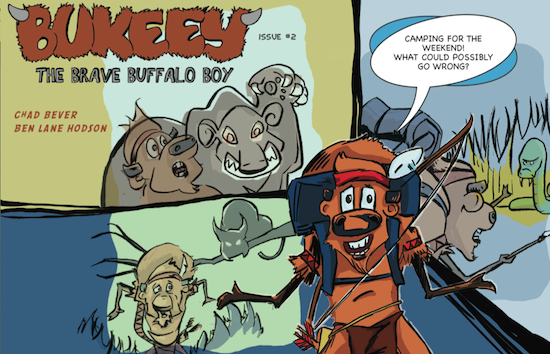
So without further ado, here’s the cover for Bukeey Issue #2:

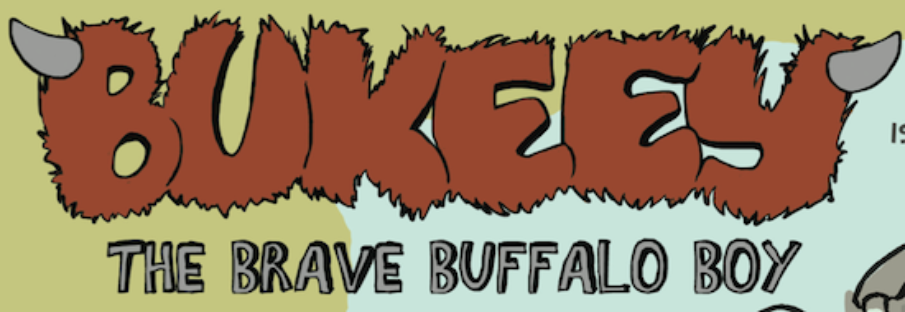
bukeey2cover

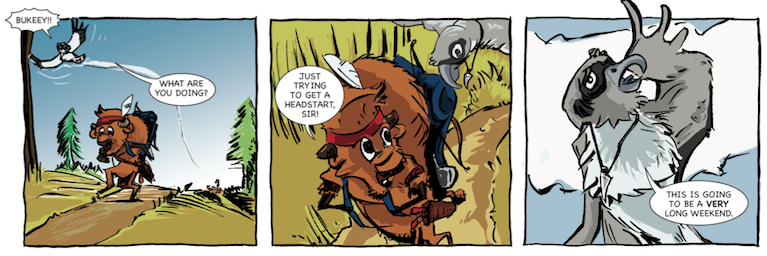
With this issue, we had the introduction of the characters out of the way and we could start having some fun with Bukeey’s crazy antics. Bukeey goes on a camping trip with some friends and gets into nothing but trouble along the way. Here’s a preview of a few pages from issue #2.

bukeey2-panels1

bukeey2-panels2

The issue will be available at the 2014 Emerald City Comic Con and online right after. If you haven’t already picked it up, you can get Bukeey Issue #1 here.

4 Ways to be more Tech-Courteous

March 3, 2014 By Ben Lane Hodson in Life Lessons 2 Comments

4 Ways to be more Tech-Courteous

Devices are everywhere. We’re all connected every second of the day. I’ve accepted that and I’m alright with a connected lifestyle. But just because we can be on our devices 24/7 doesn’t mean we need to be. There’s a new buzzword being thrown around for those that choose to be inconsiderate with their devices:

Techhole

It’s snappy. I like it.

Or if you are a Google Glasses owner and choose to use that every waking hour of the day, you are probably a:

Glasshole

This came to mind recently when I went out to dinner with some friends and found nearly half the restaurant staring at their devices while their significant other sat directly across from them staring into space. So here’s a few tips to help you avoid ever becoming a techhole:

Disable sound effects

What’s one of the most common distractions in meetings, restaurants, and lectures? That little swoosh sound every few minutes. Each time the phone’s sound effects ring out, every eye in the room is drawn to it. The person speaking loses their train of thought. Don’t just silence your phone. Turn off sound effects all together.

Learn to listen and focus

Human interaction can be beautiful and stimulating. Interacting with a computer just doesn’t compare to a great conversation with someone you are really connected with. The art of conversation is being lost because people are disengaging. But people skills are one of the most important things that determines your success in life. When someone is sitting across from you, focus on them. Listen to what they’re saying. React to the conversation, be funny, be interesting, make a connection.

Social media continues even if you’re not there

Unlike the question of a tree falling in the forest, your profile is still heard when you’re not online. Facebook’s servers actually continue running even when you are not logged in. If you find you are so connected to social media that you are actually becoming anti-social, dial it back. You can get through an hour long lunch meeting without checking your status updates.

Hands-free in the car means just that

Does your state have a hands-free law for driving with a mobile phone? Do you just want to keep both hands more free so you can react? I’m shocked at how many times I see someone using their hands-free phone by instead of putting it to their ear, they just hold it and talk into the mic using the speaker phone. Hands-free actually means that your hands are free.

If you’re losing your grip on reality, come back to the human race. We will welcome you. Don’t be a techhole.

The Dangers of Losing Track of the Vision

February 27, 2014 By Ben Lane Hodson in Gaming, Movies, Writing

The Dangers of Losing Track of the Vision

I have little time to play video games lately but I never miss reading an issue of GameInformer, by far, the best video game magazine still available to hold in your hands and flip the pages. In the February 2014 issue, an article appeared that described the downfall of LucasArts, for a time, one of the most innovative and exciting video game studios in the industry.

You can read the article here: Fall Of The Empire: How Inner Turmoil Brought Down LucasArts

What caught my eye, besides the near complete disfunction of the organization’s management were the accounts of various meetings George Lucas had with the staff and development teams. Lucas seemingly had to give approval on any game concept that went into production but even after that, he would randomly hold meetings to review the games process.

What’s clear is that Lucas did not understand the day-to-day pressures nor the complexity of creating an innovative video game. I think the real issue here is that Lucas forgot the basics of storytelling as he had become so deeply wrapped up in his Star Wars universe, he lost the great vision he once had. It took on a life of its own and his own creation seems to have left him behind as it grew beyond.

Quoting from the article, one story told of how Lucas would make rash decisions that would effect the entire game production process:

“When Fracture was revealed to the public, its protagonist was a character named Mason Briggs. By the time the game launched, his name was changed to Jet Brody. A person who helped give this gun-toting rebel his original name recalls going through weeks of naming conventions. “Literally, whole teams sitting together, brainstorming what looks good – the first name, the last name, etc. Done, good to go.”

But then a phantom menace struck. George Lucas would periodically check in on the status of the games his company was making, lending creative input and advice. The developer I talked to sighs, and agitatedly says, “In one viewing of Fracture, [Lucas] said it looked really good, but he didn’t like [Mason Briggs’] name. We’re like, ‘What do you mean, George?’ He responded to the effect of, ‘It doesn’t really fit. When he jumps on stuff, he moves pretty fast. I like B.J. Dart.’

“So everybody’s like, ‘No, he’s gotta be f—ing with us.’ He’s absolutely not. So when something like that happened – in the middle of the campaign, mind you – we have to go back through that entire naming convention again… from scratch.” From that second session, Jet Brody was born. Coincidentally. Jett is the name of Lucas’ son.”

But this is the one that really cracked me up. I can’t imagine being in the room when this happened:

“A similar situation arose with Star Wars: The Force Unleashed’s protagonist, Starkiller. “[That name] was only supposed to be a nickname or call sign, not a proper name from the beginning,” a former LucasArts employee says. The development team hoped that Lucas would give Vader’s apprentice a Darth moniker, which at the time, was something that didn’t happen often.

“The team threw a Hail Mary to George, saying the game would have more credibility if the apprentice had a ‘Darth’ title,” a Force Unleashed team member says. Lucas agreed that this situation made sense for Sith royalty, and offered up two Darth titles for the team to choose from. “He threw out ‘Darth Icky’ and ‘Darth Insanius.’ There was a pregnant pause in the room after that. People waiting for George to say ‘just kidding,’ but it never comes, and he just moved on to another point.””

Lucas wasn’t the reason that LucasArts failed. Management, a changing market, and developers unable to communicate with marketing caused the implosion but this is a cautionary tale about working in a medium you do not fully understand. Game development is a collaborative process and making rash decisions without consulting the team on the ramifications was a huge mistake.

I’ll always respect LucasArts for many of the amazing games they released during their time. The article’s worth a read if nothing else than to remember to never stop learning and to be a little more humble.

LTUE 2014 – Joss Whedon Writing Techniques

February 23, 2014 By Ben Lane Hodson in Books, Tips & Tricks, Writing

LTUE 2014 – Joss Whedon Writing Techniques

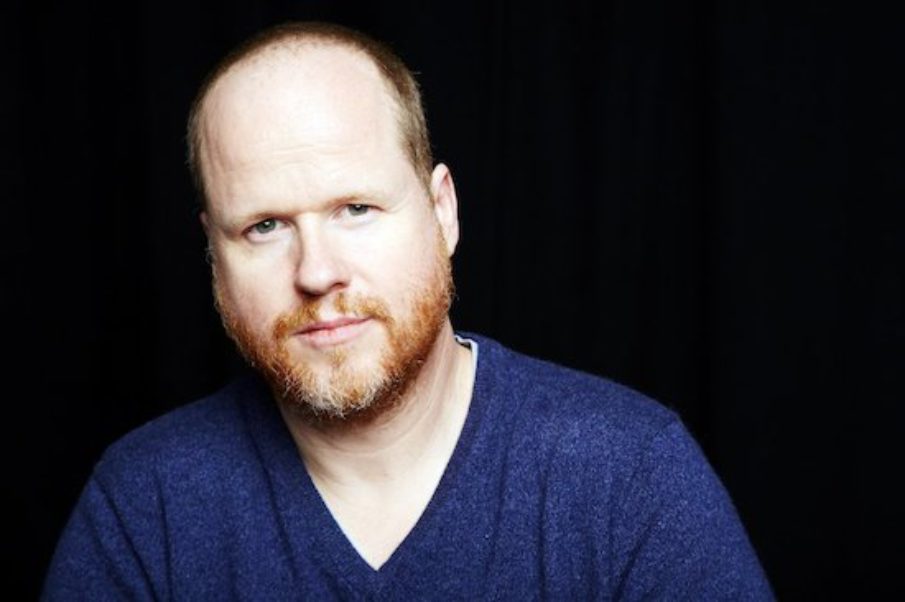
I attended The Life, the Universe, and Everything (LTUE) 2014 writer’s conference last weekend and took a boatload of notes through the entire weekend. Over the next few weeks, I’ll be sharing things I’ve learned, notes I took along the way, and the big epiphanies that came from a weekend of endless writing panels and learning sessions.

One of my favorite sessions I attended was a talk given by Chersti Nieveen called: Learning Advanced Writing Techniques from Joss Whedon.

Chersti is a YA author and active on both Twitter and Facebook. You can find her blog including a great writing advice section with many of the tips she shared in her presentation here:

http://cherstinieveen.wordpress.com/

She spent many painstaking hours reviewing every scrap of information she could find about Joss Whedon’s writing process, watching DVD commentaries, behind the scenes details, and of course, watching everything Joss has ever produced. From this process of research, she came up with a list of some of the advanced writing techniques Joss Whedon uses to make consistently interesting and beloved characters, non-cliched plots, and tons of conflict.

Here’s a few highlights I took away from her presentation:

Control the Reader’s Expectations

  • Find things about the character that you love. Remind yourself and your audience why they love this character so much.
  • Defy and then reaffirm the reader’s expectations
  • Use cliches to your advantage. Readers demand to be challenged so turn the perceptions against them.
  • You must have at least three plot twists in a story.

Writing Better Characters

  • Give every character a secret.
  • Make every character believe in something. Give each an ethos or cause by which they live.
  • Characters should grow and change so they don’t always react the same way.
  • Make characters sacrifice, lose something, give up things.
  • Never make the solution/resolution simple or easy.

We watched a bunch of clips from Joss Whedon’s work. Some specific episodes she recommended watching and studying were:

Buffy the Vampire Slayer – Season 2 / Episodes 21 & 22

Firefly – Objects in Space (Joss claims this is the best example of how he tells stories)

Angel – Hero (Season 1 / Episode 9)

Developing the Shutter Comic Series

February 20, 2014 By Ben Lane Hodson in Books, Comics, Tales of the Macabre West

Developing the Shutter Comic Series

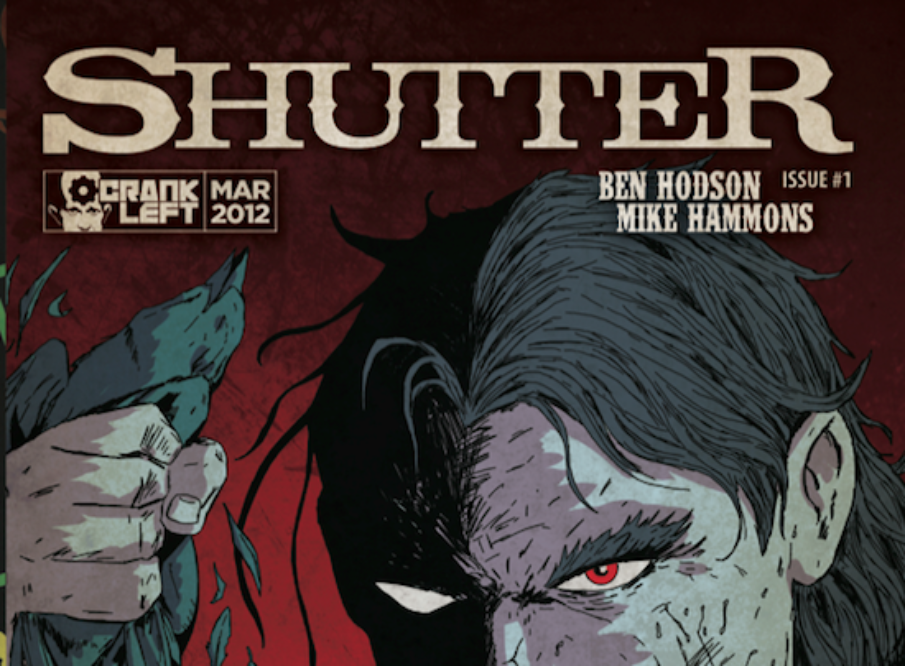
I’m super excited to announce that issue #2 of Shutter will be released  at the Emerald City Comic Con on March 28, 2014!

With all the excitement about issue #2, I thought it’d be fun to talk a little about where the inspiration for Shutter came from and what makes this book so special. The first ideas for Shutter were conceived back in 2008, over a long Christmas holiday break in which I found a sudden and voracious interest in all things American West.

Frank Gunn Roberts

The real spark came from something so simple. My great grandfather was Cherokee Indian (you’d never know it from looking at me) and his name was one of the most perfect “western” names ever: Frank Gunn Roberts. That name alone caused my mind to explode with ideas that developed into the character “Frank” that is the focal point of Shutter’s story arc.

I snuck down to the library and checked out nearly every book I could find on the subject. Yes, real, paper, physical, old, books. I was mesmerized by the stories of the old west, the outlaws, the gold fever, people living on the edge of civilization, battling nature on a daily basis. By the end of the vacation, I’d read over 30 books on the subject and could quote chapter and verse on western lore. I was particularly interested in the period right after the Civil War (late 1860’s) when many, disillusioned by the war, headed west for a new life.

A Collaboration

Though I wrote the Shutter script, the story credit can definitely be shared with two of my brothers. We work as a story team on many of our comics, bouncing ideas off of each other and laughing at the crazy things we come up with. Shutter’s colorful characters and perilous situations owe much to these collaborative sessions, the first of which took place on that very same Christmas break several years ago.

Louie Daguerre

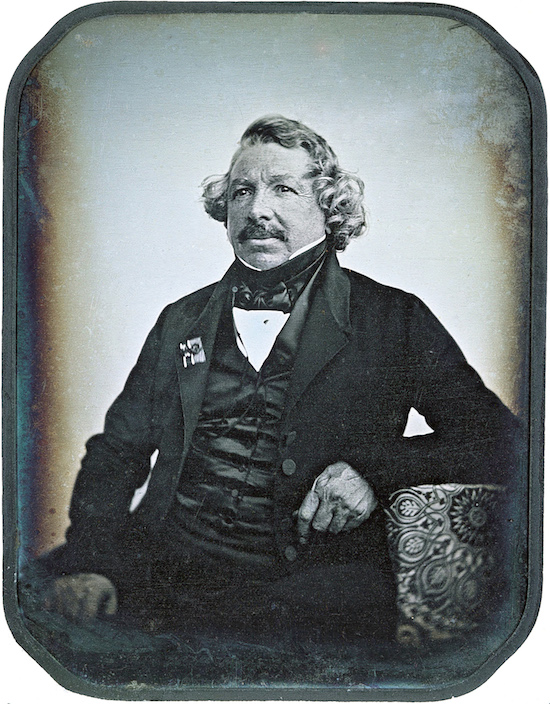
Along the way, I read about Louie Daguerre, the inventor of the Daguerreotype Camera. His death was surrounded by rumors and mystery. So I asked myself, what if Louie had invented a new camera at the end of his life, a camera that could take someone’s soul? What if he used it on himself to test it? That was the question that turned Shutter from a straight Western into a Western / Horror mash-up.

Louis Daguerre taken with his own invented camera

Louis Daguerre taken with his own invented camera

That became Shutter’s set up, a Western / Horror story set against the backdrop of the 1860’s American West with a camera that can take men’s souls and Frank, the only man that can stop it. I got so inspired by this era that my first novel, Tales of the Macabre West is set in the same time period.

I will share some more tidbits about Shutter #2 as we get closer to the release and also a cover reveal with some first-look pages along the way.

You can get the first issue of Shutter here: Shutter Issue #1

Breaking Through Writer’s Block

February 17, 2014 By Ben Lane Hodson in Writing 2 Comments

Breaking Through Writer’s Block

The other day, one of the writers from our awesome writers group asked a question. How do I get unstuck?

She had been battling an important final scene that needed tons of energy and excitement and couldn’t figure out how to write it. She had the ideas. She knew what was supposed to happen. But she had gotten so stuck she was starting to second guess herself, starting to wonder if the whole thing was even going to work. She wasn’t even excited about writing the scene anymore.

I wrote up a list of a few things that had helped me get through blocks in the past that I thought I’d share here as well:

A New Point of View

Write the scene from a different point of view or voice. Use a different character’s point of view and figure out how they might experience the scene as opposed to your current character’s POV. You could also try writing in 3rd person instead of 1st or vice versa to see if that jogs your creativity.

Music Sparks Creativity

Try playing some music that would go well with the scene. Listen to some soundtracks until you find a song that would be perfect to play while your scene happens. Then crank that up and  just start writing thoughts, feelings, anything that pops into your head as the music plays.

Break out of your Genre

Watch a movie that is completely out of your genre. If you are doing YA science fiction/fantasy with romance and action, how about watch a western or period drama? Something totally different. See how the characters interact with each other. Listen to their dialogue. Think of what they must be feeling. Sometimes this can spark an idea.

Pick a Different Scene

It’s important for you to be excited about writing the scene. The scenes excitement will be proportional to how much energy you have for it so find ways to get stoked. Maybe there is a certain part of the scene you think will be fun to write but you are stuck before that point. Just skip to that point and write that first. Then you can backtrack and keep the energy up.

Reward Yourself

Make a goal to write a couple of paragraphs and set a reward for yourself, then go do it (even if it sucks). Enjoy the reward and don’t think about the writing. Once the reward is consumed, do it again. Baby steps.

Remove Distractions

Have your spouse get the kids out of the house or you go out of the house with your laptop somewhere else. Try writing in a coffee shop if you like background noise or just drive somewhere beautiful, park, open your laptop, and start writing.

In the end, sometimes it boils down to just holding your nose and writing, no matter how bad it is. Get something on the page and then you can revise it.

When is this book going to be published?

February 13, 2014 By Ben Lane Hodson in Books, Tales of the Macabre West

When is this book going to be published?

I wanted to give a quick update on Tales of the Macabre West. Not surprisingly, I’m getting a lot of questions asking when this book is going to be done. First, I’m happy that so many people are interested in reading what I’ve written. That’s just awesome. Second, I’m working my butt off, trying to finish it.

So why isn’t it done yet?

Let me explain.

This is my first novel

I’m in uncharted territory (at least personally). I’ve written a lot of comic book scripts, screen plays, and short stories. But putting together a 70,000+ word novel is a whole new challenge. I learned a lot as I wrote the first draft in 2013 and now revising is a whole new challenge. I think I’ve finally got a process that is working well but it has been a lot of trial and error to get to this point.

Quality matters

Once it’s printed, it’s set in stone (well… paper actually). The only deadlines I have are self-imposed. That doesn’t mean I’m ignoring the deadlines, it just means I’m not rushing things. Quality matters. This will be many people’s first experience with my writing and I want it to be the best I can possibly make it.

It’s a learning process

Figuring out how to write this many words, how to keep track of multiple plot lines, make believable characters, finish a first draft, then go back and revise for story structure, sentence structure, punctuation, and finally to compile and format it as a book, learn how to get it out in paper and eBook form, and build a platform to market it on – well, it’s a lot to learn. I couldn’t be more excited about where I’m at but it does take time to do things right.

Where I’m at right now

I have about 25% of the book completed. That means, 25% is totally revised, edited, and I’m pretty happy with how it reads and it came out. But that still leaves 75% that is in process. The first and second drafts of that part are done. It’s all there. It just needs a lot of revising and love before it will be ready. I make progress every day and build on that percentage.

So when is all of it going to be done and ready to print?

I’ve been saying the first part of 2014. Now I’m going to get more specific. My goal is to have it ready by the end of April. There’s still a lot of work to do but I based on the progress I’m making and my current process, it is an achievable goal.

So there you have, only a few more months to go before you’ll be able to read Tales of the Macabre West. Now the hard part begins, making sure I hit this date I just told you all about.

«< 35 36 37 38 39 >»

About Ben

Ben Lane HodsonWriter, comic book creator, filmmaker, musician, entrepreneur, cook, software developer, hiker, surfer, & rock climber. Ben is the author of the Blood & Glory, Shutter, 8-Bit, and Bukeey comic book series. His new book, Tales of the Macabre West was published in December 2014.

Follow Me

Latest Book


My short story Little Bundle of Death was published in this anthology. Available in both paperback and eBook.
Buy it on Amazon.com

Ben’s Instagram

Recent Posts

  • Walking with the Dead: The Cinematic History of Zombies
  • My Experience using a Pebble Watch
  • Panel Schedule for Salt Lake Comic Con 2016
  • Supergirl: The Panel
  • The Slasher Craze of the 1980’s
Ben Lane Hodson
© Ben Lane Hodson 2026
Powered by WordPress • Themify WordPress Themes

↑ Back to top