Ben Lane Hodson
Writer, comic book creator, filmmaker, & musician
  • About
  • Books
  • Contact
  • Media Kit

You Don’t Need a Kindle to Read an Amazon eBook

December 18, 2014 By Ben Lane Hodson in Books, Tales of the Macabre West

You Don’t Need a Kindle to Read an Amazon eBook

Since releasing Tales of the Macabre West earlier this week, several people have shared a concern that since they don’t have a Kindle eBook reader, they wondered how they could read Tales of the Macabre West’s digital eBook. There seems to be a misconception that you need to purchase an Amazon Kindle reader in order to read the digital eBooks you buy from Amazon but actually. that’s not the case.

I’ve got some good news. You don’t need a Kindle to read an Amazon eBook.

Amazon has apps for nearly every mobile device available whether it be your mobile phone or your iPad or your Samsung Galaxy. So just because you don’t actually own a Kindle, you can still read on any of these devices. Here’s what you need to do to be able to read an Amazon eBook on your phone, iPad, or whatever mobile device you have:

1) Download the Kindle app – Download the Kindle app for your phone, iPad, or other mobile device. It’s a free app and available on the Apple App Store and Google Play Store as well. (Also available for Windows Phone). Just search “Kindle” on the app store or you can use this link: https://www.amazon.com/gp/digital/fiona/kcp-landing-page

(There’s even apps for your computer – both Windows and Mac so you don’t even need a mobile device to read a Kindle book)

2) Login to the App – Login to the app using your Amazon.com login. As soon as you login, the app will immediately sync down any eBooks you own to your app, ready for you to read.

3) Buy an eBook on Amazon – If you’ve already previously bought books on Amazon.com, you will see them in your Kindle app immediately after you login. Any books you buy in the future will be automatically sync’d to your app the next time you open the app. If you haven’t bought an eBook on Amazon.com yet, go find a book you’d like to read by searching for it on Amazon.com.

You’ll notice on the right side (if you are logged into your Amazon.com account), that you will see an option to Buy with 1-Click and a drop down to choose which app you want to have this book automatically delivered to (don’t worry, you can deliver it to as many devices as you like after it’s purchased if you want it in more than one place).

1-click

As soon as you purchase the eBook, it will be sent to your Kindle app and you’ll see it appear the next time you open the app on your mobile device.

If you’d like to read the eBook edition of Tales of the Macabre West, here’s a quick link to get to it on Amazon:

http://www.amazon.com/Tales-Macabre-West-Ben-Hodson-ebook/dp/B00QQL6XEE/
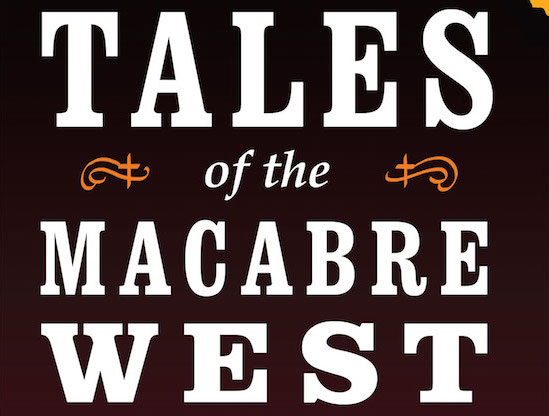
Tales of the Macabre West is Available Now

December 14, 2014 By Ben Lane Hodson in Books, Tales of the Macabre West 1 Comment

Tales of the Macabre West

Tales of the Macabre West is now available in both paperback and digital eBook editions! This book has been a little over a year  and a half in the making and I’m really proud of how it came out. I’ve received some tremendously positive feedback from Beta readers and I’m excited to hear what all of you think.

Here’s the links to buy of Tales of the Macabre West on Amazon.com:

Buy the paperback edition on Amazon.com

Buy the Kindle edition on Amazon.com

Here’s a couple of reasons why you might consider picking up your very own copy:

There’s awesome illustrations included!

The book contains several illustrations that depict important moments in the stories. My brother, Bryant Hodson, did all the artwork and we created it in a style similar to etchings you might find in books from the late 19th century (in which the book is set in). Here’s a sample of some of the excellent illustrations.

You might like this book if you liked…

I drew inspiration, especially in terms of the mood of the book, from countless books, movies, and comics. If you liked movies such as Unforgiven (1992), The Good the Bad and the Ugly (1966), and True Grit (both versions), then definitely check out Tales of the Macabre West. If you liked books such as Blood Meridian by Cormac McCarthy or The Sisters Brothers by Patrick deWitt, then check out Tales of the Macabre West.

About Tales of the Macabre West

Here’s a quick description of what’s included in the book: Five thrilling tales of death in the Old West. Set in the rugged American west of the late 19th century, Tales of the Macabre West is filled with tales of black magic, Native American ghosts, demons, death, and redemption.

  • The Gallows at Rocky Point – The colonel, a hard and bitter man, tempts fate when he comes face-to-face with the Nightwalker, a mysterious creature who is hell bent on retribution.
  • The Scarecrow – The Dunn family struggles to raise a corn crop on the unforgiving frontier. When they purchase a magic scarecrow from a strange traveling salesman, it seems their luck may have changed. But for better or worse?
  • Friend or Fiend – A down-and-out gambler with a knack for losing, meets an enigmatic drifter who claims to be able to fulfill any desire… for a price.
  • The Unfinished Business of Bill Parsons – An undertaker finds he must complete a task for one of his customers or suffer the voice of the dead ringing in his head for eternity.
  • A Disappearing Town – A sickness has spread through town, taking with it friends and loved ones including Caroline’s husband. When her two sons start showing symptoms, Caroline has no choice but to leave her boys and race to find medicine before it’s too late.

I hope you enjoy reading it as much as I enjoyed writing it!


Mark your Calendars for December 15th

December 8, 2014 By Ben Lane Hodson in Books, Tales of the Macabre West

Mark your Calendars for December 15th

Mark you calendars becuase Tales of the Macabre West finally has a release date. You will be able to get your very own copy (either print or digital or both) one week from today.

December 15th, 2014, Tales of the Macabre West will be available on Amazon.com in both paperback and digital formats.

If you are an Amazon Prime subscriber, you will even be able to borrow Tales of the Macabre West for free!

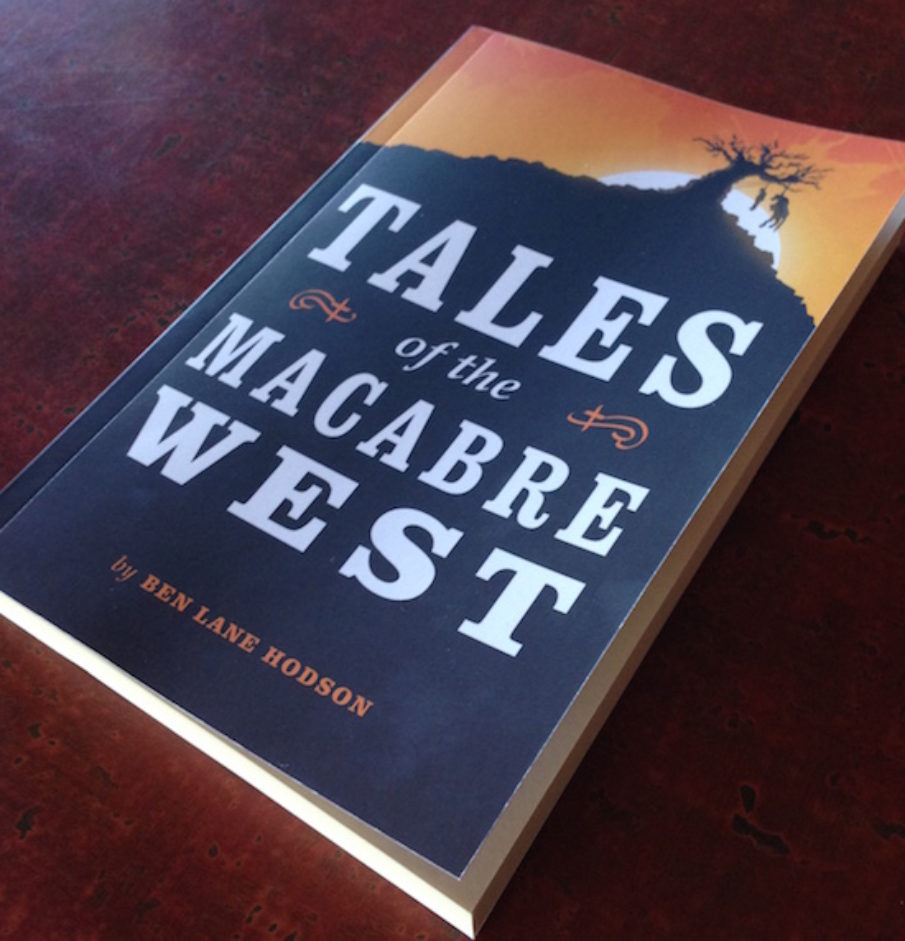
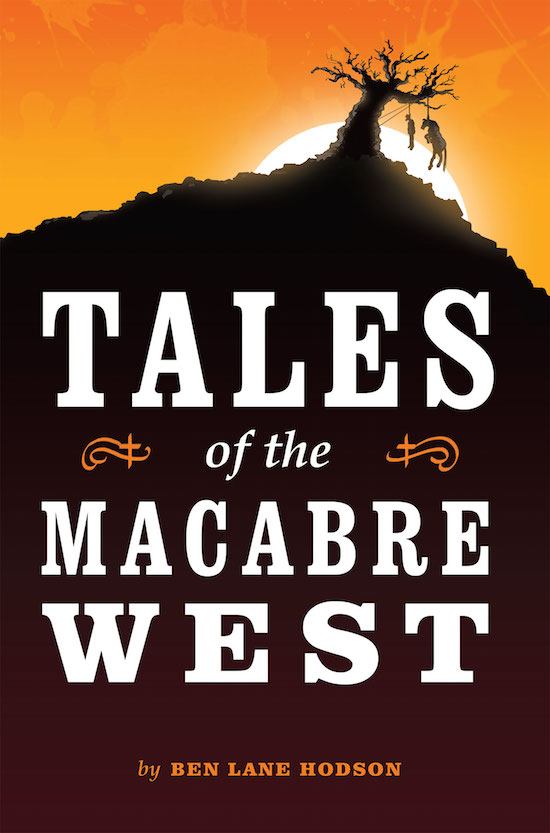
Tales of the Macabre West – Cover Reveal

November 19, 2014 By Ben Lane Hodson in Books, Tales of the Macabre West, Writing

The publish date for Tales of the Macabre West is fast approaching. I hope to make an announcement very soon. In the meantime, here’s the reveal of the front cover for the book:

Tales of the Macabre West cover

Tales of the Macabre West cover

This cover was created by my talented brother Bryant Hodson. You can see some of his other work and art projects here: https://www.behance.net/bryanthodson. I couldn’t be happier with how the cover turned out and besides being eye-catching, the cover also does such a great job of evoking the foreboding & suspense contained in the book. Keep an eye out for an announcement about release dates soon!

Interstellar Explained

November 15, 2014 By Ben Lane Hodson in Movies 15 Comments

Interstellar Explained

An explanation of Interstellar’s concepts, analysis of potential plot holes, and answers to common questions.

A word of warning: Spoilers ahead. If you haven’t seen the film, you may not want to read this because I go through all the major plot points of the film and spoil everything.

Before I dive into the details, I did want to respond to a few common criticisms I’ve seen from many film critics and reviewers as well as online commenters.

1) Too sentimental: One of the most common is a basic complaint that goes something like this: “Interstellar’s visuals and science fiction are great but the story is much too emotionally driven to the point of becoming sentimental and sometimes even maudlin.”

Now there’s a little irony in this criticism because if you look back at many of the reviews for previous Christopher Nolan films such as Inception, you will see critics saying that Nolan’s films are “cold” and “emotionless” and that his movies “lack a soul.” Now that Nolan has brought an emotional edge to his latest film, Interstellar, he’s getting the opposite criticism.

I will be the first to admit that Interstellar plays much better the less cynical you are. If themes of belonging, family attachments, parent/child promises & missed expectations, and “love conquers all” leave you cold and uninterested, then you are definitely going to have some challenges with parts of Interstellar’s story. If you are able to suspend your disbelief, identify with the characters, and take a more hopeful, optimistic approach to the material, you may find the film very touching, even to the point of tears in some parts.

2) I can’t hear what the characters are saying: Another common criticism is the sound mix, especially in IMAX. I agree with this completely. There are many times where the sound effects and musical score of the film drown out the dialogue and I really wish Nolan had corrected that for the IMAX showings. In 35mm, it seems the sound is much more discernable. That being said, the second time I saw Interstellar in IMAX, I understood almost every word so maybe some of it was just a matter of my ears getting used to the way the character’s spoke. Regardless, it is a frustration for a lot of people.

Update: Christopher Nolan has addressed this sound controversy specifically. According to his comments, the sound is exactly how he intended. He used some of these sound moments to draw the audience further in. I’m not sure his experiment totally worked but it’s an interesting approach nonetheless. Here’s his detailed comments:
http://www.movieweb.com/interstellar-movie-christopher-nolan-sound-controversy

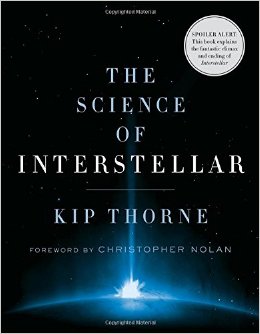
3) Interstellar got the science wrong: The final common criticism (which came mostly from Internet comment boards – not from critics) was that Interstellar gets the science wrong. This usually is spoken confidently by Internet commenters who seem to all have degrees in Physics and are experts in relativity. If you believe that a lot of the science in Interstellar is wrong, then you need to read Kip Thorne’s book:

The Science of Interstellar – by Kip Thorne

science

Amazon link: http://www.amazon.com/Science-Interstellar-Kip-Thorne/dp/0393351378/

Kip’s book is a fascinating read that goes into painstaking detail to explain the science and physics of Interstellar.

I’d also point you to popular Physicist Neil Degrasse Tyson’s article praising the science of Interstellar:
http://deadline.com/2014/11/neil-degrasse-tyson-interstellar-twitter-comments-1201280567/

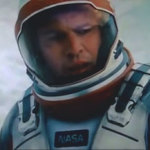
I refer to a lot of different people and places in Interstellar in the analysis below. For reference, here’s a quick crash course on characters, ships, and astronomical phenomena shown in Interstellar.

Characters

Cooper
Amelia Brand
Doyle

Romilly
Professor Brand
Murphy “Murph”

Dr. Mann

Ships

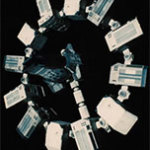
Endurance
Ranger
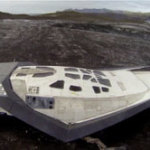
Lander

Planets & Astronomical Objects

Wormhole (near Saturn)
Black Hole “Gargantua”
Miller’s Planet (water planet)

Mann’s Planet (ice planet)
Tesseract
Edmond’s Planet (Earth-like atmosphere)

So without further ado, here’s an explanation of Interstellar’s concepts, analysis of potential plot holes, and answers to common questions.

So many people online say this movie gets the science wrong in nearly every way but how can this be? Wasn’t Physicist Kip Thorne involved in the film from the very beginning as a consultant?

Yes, Kip Thorne was not only a science consultant, he wrote the first treatment of the story (much changed in later iterations). His dream was to make a big-budget Hollywood movie that got the science right and yet was still entertaining, a film that could inspire future scientists and maybe even teach the audience about some of the incredible principles of physics and Einstein’s relativity.

Many of the science principles that online commenters suppose Interstellar got wrong are in reality just misunderstandings that these commenters have about the science itself. In Kip Thorne’s excellent book: The Science of Interstellar, he mentions that several of his physicist friends & colleagues (including Stephen Hawking) critiqued his ideas in the book before its publication to make sure they were accurate in regards to the scientific knowledge we have today.

Dr. Kip Thorne laid down two guidelines to strictly follow on the set of the film: 1) nothing would violate established physical laws and 2) that all the wild speculations would spring from science and not from the creative mind of a screenwriter. Christopher Nolan accepted these terms and followed them.

Alternatively, some will say the science is not the issue; instead, the issue is with the plot. The problem with this argument is that Kip had a hand in the original plot as well and most of the major plot points are directly driven by the science.

Some critics have even said that Christopher Nolan used “magic” instead of science for several key plot points. It makes me think of a famous quote by Arthur C. Clarke (who wrote 2001: A Space Odyssey):
“Any sufficiently advanced technology is indistinguishable from magic.”

Were there liberties taken? Of course. But not nearly to the extent that some negative comments would lead you to believe.

Why wasn’t Interstellar clearer about why the Earth had to be abandoned? I thought it was Global Warming that was causing all of this?

I’ve seen this question everywhere online and frankly, it’s befuddling. The reason Global Warming is not mentioned as the reason the Earth is being abandoned is because Global Warming has nothing to do with it. The Earth is in the last days of a worldwide famine caused by blight. This blight attacks food-producing plants. Blight has spread across the world’s crops, destroying entire yields. When the film opens, corn is one of the last crops still thriving and Professor Brand shows Cooper (when they are first talking together at NASA) that corn will also be attacked by blight soon. This blight is the cause of mass starvation worldwide which has taken the lives of over 6 billion people (according to Cooper’s father-in-law). In this case, climate change is not the issue. Instead, blight has caused the world’s food supply to be drastically reduced and there is no way to grow new food.

Is it even scientifically possible that blight could destroy all plant life on Earth?

According to Kip Thorne’s book, while a worldwide blight is scientifically possible, it is however unlikely. Several prominent biologists comment for Kip’s book and provide some interesting scenarios that describe how a blight of this kind could conceivably occur. See Kip’s book for much more detail on this.

Why did the Indian drone go off course & fly over the farm and why was Cooper trying to “capture” it?

A gravitational anomaly caused the drone’s guidance system to fail and it went off course. This same type of anomaly effected Cooper’s combines. He had to reset them to account for the anomaly. Cooper wanted to capture the drone because he said it had a power supply that could single-handedly run the entire farm’s power needs. The drone plays a more important part in the story than you may have noticed. Cooper originally discounts Murph’s “ghost”. It’s only after finding this drone and then later seeing his combines go off course, that he begins to take Murph’s concerns seriously. Both of these anomalies are not accidents. They are obviously caused by the future 5th dimensional beings (referred to as “they” in the film) to try and get Cooper to go on the mission and fulfill his destiny. These anomalies are messages from these beings to Cooper so that he will take another look at Murph’s ghost and thus find the coordinates to the NASA facility.

How could people in the future believe that the Apollo moon landings were faked?

For some, this little detail in the film stretched all credibility. Most fair, science-minded people in the world know the Apollo moon landings actually happened. Despite the endless list of videos on YouTube and crazy conspiracy theories about the moon landings, there is irrefutable evidence they occurred. So it makes it hard for some fair-minded people to believe this plot point in the film. But for me, this was one of the most believable things. This kind of science-denial is happening more than ever in America today. We have such a misinformed populace that science is seeming more like magic each day to the average citizen. Our sense of exploration and motivation to reach beyond ourselves has been greatly diminished since the 1970’s. There are large portions of the U.S. that believe 9/11 was an “inside job”, that the Holocaust didn’t happen, and that the Apollo moon landings were faked. I could definitely believe in 40 years, we may have schools teaching this kind of nonsense.

If no other crops such as grains or hops have survived, how can Cooper be drinking a beer?

Cooper is not drinking a beer made from traditional grains or hops. You can clearly see on the label that it is a “corn-based beer”.

How did Cooper discover the coordinates to the NASA facility? They seemed to be given to him magically?

The future Cooper gives the Cooper of the past the coordinates to the NASA facility using gravity to control the dust particles in the room, arranging them into a binary pattern that reveals the coordinates. The coordinates are not magically given; future Cooper is sending them from the future to the past using gravity waves.

Why is NASA so close to Cooper’s house? Isn’t that a bit too coincidental?

It does not appear that NASA is actually that close. Cooper leaves in the early morning from his house (with Murph tagging along under the blanket) and arrives at the facility’s outer fence sometime in the later night. Assuming Cooper and Murph drove all day, stopping only for gas, they could have traveled across several states depending on where they were at in the U.S. during that time. It’s true that NASA was in driving distance of the Cooper’s farm house but it didn’t appear to be that close. Also, Nolan is famous for his quick, sometimes confusing jump cuts (to compress time in his films). Maybe Murph and Cooper had been on the road for several days. It isn’t clear in the editing how long they drove. Finally, spending valuable runtime in the film showing Murph and Cooper on a road trip wouldn’t have made the film better.

Professor Brand says that the public does not want to fund NASA so where are they getting their money from to build that facility?

Just after Professor Brand tells Cooper that the public would not support NASA because they want to focus on problems on Earth, (and not travel to the stars), Professor Brand then mentions that NASA is receiving secret money from the U.S. government to fund their facility and missions through the wormhole.

If Cooper was one of NASA’s best pilots, why didn’t they just call him when they needed him?

It appears NASA was operating in secret and not even the public or Cooper knew it existed. In addition, the opening of the film shows Cooper dreaming of flying a Ranger ship and having a problem. This failed mission seems to be the reason Cooper is no longer flying and not with NASA. This may be why NASA had not called him. It isn’t clear what NASA’s plan was before they found Cooper but a lot of time is skipped here in the film so we can assume there were other pilots bumped to put Cooper on the mission.

Why did Professor Brand immediately ask Cooper to be on the mission within only hours of seeing him show up at the NASA facility? It all seemed so rushed and unbelievable?

Professor Brand believes that Cooper was brought to NASA by the 5th dimensional beings that created the wormhole (referred to as “they”). The Professor has complete trust in these beings and so he feels it is a sign from them that Cooper was “brought” to NASA. That’s why he is so quick to get Cooper involved in the mission despite Cooper’s past mission failure (seen in Cooper’s dream at the beginning of the film).

Why didn’t Cooper need to train for the mission?

Cooper did train. He may have trained for several months, possibly longer. This is not shown in the film. I think there may be some confusion because of the way this scene was edited. As Cooper drives away from the house after saying goodbye to his family, with tears in his eyes, we hear the mission countdown. Then the next shot is the Saturn rocket leaving Earth with Cooper aboard. We know time has passed obviously because Cooper didn’t just teleport from his truck to the ship but it isn’t clear to the audience how much time is passed. This quick cut editing was done to compress time in the film and get right to the mission instead of wasting screen time showing Cooper training and preparing for the mission, which wasn’t relevant to the story.

Why did everyone know each other in the film? It seemed too coincidental?

It’s true that there are a lot of coincidences. Professor Brand was Cooper’s mentor and is now heading up the entire NASA operation. Murph goes to work for Professor Brand. Brand’s daughter Amelia is on the mission with Cooper. Understand though, one of the big themes of the film is the connection between children and their parents. The relationships here are meant to reinforce this theme and provide a quicker way to bring people together in the film to save screen time.

Why didn’t NASA just send robots through the wormhole to explore the planets? Why did they need humans?

It’s stated in the film that the reason robots could not be sent is because the robots lack the ability to improvise. Improvisation is a key factor that Professor Brand believes is needed for the mission to be a success. While some may disagree with Brand, it’s not much of a film if none of the characters go out exploring.

Why did the crew leave Earth using a Saturn-style rocket but on all the other planets (including a planet with 130% of the Earth’s gravity), they were able to land and takeoff using only the Rangers and Landers?

Good question. It’s possible the crew wanted to save fuel and so didn’t want to use the Ranger’s fuel supply leaving Earth. But that’s a bit of a weak explanation. My hunch is that Christopher Nolan loves the Apollo missions and wanted to show the beauty of a Saturn rocket launch and let the audience experience the sound and wonder of that rocket. Also, the sequence where the Ranger first carefully docks with Endurance is very important to set up so that later the audience will understand the stakes when Dr. Mann imperfectly docks with Endurance.

Aren’t black holes and wormholes the same thing?

No. This seems to be a common confusion online. Many commenters seem to believe that the wormhole the crew travels through and the black hole, “Gargantua”, that Cooper and TARS enter are the same thing. They are not. Black holes are caused when a large dying star collapses in on itself. Wormholes are scientifically possible only if certain physics theories turn out to be true. Wormholes are a gateway between two points in space. Theoretically, a wormhole could be used to traverse a large distance in a short amount of time. In contrast, black holes are large, dense, gravity holes from which nothing, not even light can escape.

Why didn’t Cooper know what a wormhole was? Why did Romilly have to explain it to him?

Cooper did know what a wormhole was. His confusion came from the fact that he just didn’t realize the wormhole entrance would be a sphere instead of a circle. When Romilly reminded Cooper of the dimensions, Cooper himself put it all together and realized the hole would be a sphere (a 3D circle). None of the crew had ever seen a wormhole up close before so it kind of makes sense that Cooper may not have considered how the entrance would look before that time. Also, the exposition that Romilly gives about how wormholes work provides an easy way to educate the movie’s audience about wormholes at the same time.

Wouldn’t it take longer than 2 years to reach Saturn by spacecraft? When Saturn is closest to Earth, it is still 1.2 billion km away?

With today’s current rocket power technology, yes, 2 years is not enough time to reach Saturn. But it seems likely that in this future time of the film, humans would have developed a propulsion system to travel an estimated 300 km per second. This is what Kip Thorne’s book speculates will be our capability in this future. That coupled with several slingshot maneuvers around Mars (as mentioned by Doyle), the crew could each Saturn in 2 years.

Why didn’t the 5th dimensional beings (future humans) referred to as “they” in the film put the wormhole close to Earth? Why put it all the way out by Saturn?

It isn’t explained in the film but there are probably three main reasons: 1) The gravitational anomalies produced by the wormhole (and by Gargantua on the other side) would cause major problems on Earth. Keeping it far away removed these gravity consequences. 2) Saturn is one of the most identifiable and beautiful planets in our solar system. It provided a gorgeous backdrop for some of the inspiring visuals of the film. 3) In 2001: A Space Odyssey, Stanley Kubrick had originally planned to have the end of the film take place near Saturn instead of Jupiter but at the time, the technology was not available to show rings around Saturn so he chose Jupiter instead. Christopher Nolan has said that 2001 was a major influence on his film and he set the wormhole on Saturn as an homage.

Why were the crew of the Endurance unable to transmit data back to Earth from inside the wormhole but before entering the wormhole, they received transmissions from the 10 ships that had been sent through?

When the crew first reaches Saturn, before they’ve gone through the wormhole, Doyle mentions that they are receiving a signal from 10 ships on the other side of the wormhole. These signals are being relayed by a beacon set up on the other side of the wormhole. The signals are not complicated though. Doyle says they are only simple binary. This means “yes” or “no” is all they are receiving. They get 3 “yes’s” and those are the 3 planets they choose to explore. Before reaching Saturn, it does not appear that they were able to receive these binary signals, hence no one on Earth can receive them. Once the crew enters the wormhole, they are bound by the same limitation of only being able to send a binary signal back to the beacon but no one on Earth can receive those transmissions and any other more complicated data is not transmittable.

Why would the crew think it was a viable option to settle a planet that orbits a black hole?

The crew is going off the assumption that they have been lead through the black hole by the 5th dimensional beings (referred to as “they”). There are no other habitable planets in our solar system. The crew believe they have been brought through the wormhole for the purpose of saving humanity. There are limited options on the other side of the wormhole and all of the planets that are accessible for a possible new home for humanity are near the Gargantua black hole. The crew aren’t given any other options (and have no way to travel to any other solar system) so they must choose from the planets here.

How could a planet orbit a black hole and be close enough to have that kind of time shift (1 hour = 7 Earth years) but not be completely destroyed by the black hole?

The key to understanding how this is possible is to understand the shape of the orbit of the Miller’s planet (the water planet) as well as the speed at which the planet is moving. The planet’s orbit is extremely elliptical. It swings wide out into space before coming near the black hole. In addition, it is moving at close to the speed of light. Along with this, the black hole is spinning at a very fast rate. Check out Kip Thorne’s book for a more detailed explanation of how this could work using the principles of physics and relativity.

If Miller’s planet (the water planet) is moving at close to the speed of light, how could the Endurance’s crew even go fast enough to land on it?

Cooper mentions how this is to be done in a quick comment. They are discussing how to reach the planet and Cooper says he can swing out and slingshot around the neutron star that is near the black hole. Using both the neutron star and the black hole to slingshot around, the Endurance can build up enough speed to reach the planet and deploy a Ranger to land there.

Why did Cooper, Amelia, & Doyle all experience 3 hours of time on the surface of Miller’s planet (the water planet) but the Endurance experienced 20+ years?

The Endurance did not orbit the planet close enough to be effected by Gargantua’s time shift. When the crew is discussing which planet to check first, they also discuss this decision in detail and what the consequences will be. The decision is specifically made to keep the Endurance far enough away from the planet (which also means it is farther away from the black hole as well and the time shift) that time is not drastically slowed for Romilly. Cooper, Amelia, and Doyle on the other hand are very close to the black hole, having landed on the planet, they are so close to the black hole that space is being massively warped by the gravity of the black hole. Coupled with the extreme speed they are moving at, this is causing the huge time shift seen in the movie. Again Kip Thorne’s book describes this in much better detail.

endurance-ranger-millers-planet

An illustration from Kip Thorne’s book that shows how the planet (Miller’s planet) is accessed by the Ranger in comparison to the orbit of the Endurance.

Where did the light come from that provided a “day” on these planets orbiting the black hole?

The black hole is sucking in the remnants of a giant nearby star. The swirl of the star’s material is creating an accretion disk around the black hole. This star material is still extremely hot and will stay that way for millions of years as it is slowly sucked into the black hole. The star is bright enough and hot enough to provide the light and heat to the planets near the black hole.

Why didn’t Cooper and his team see the giant tidal waves on Miller’s planet (the water planet) before they landed?

The waves are caused by the tidal gravity pull of the black hole Gargantua. Because of the elliptical orbit of the planet, the waves are created by the gravitational attraction of the black hole, causing the waves to bulge out in the direction of the black hole. Before the crew landed, the planet had not come close enough to the black hole to cause these giant waves yet. It was only after the crew landed that the waves occurred because the planet was now moving a bit away from Gargantua in its elliptical orbit.

Why did the signal the crew received from Miller’s planet (the water planet) tell them it was a viable option to explore? Why was it broadcasting a “thumbs up” when the crew that had landed there were already dead?

Because of the time shift, the signal the crew received from Miller’s planet appeared to have been broadcasting for a long time (in Earth time) but according to the time shift on the planet (where time slows way down), the signal had actually only just been sent before Miller’s crew landed and their ship was destroyed.

Isn’t it too coincidental that there are three planets in the same system that can all support life?

From what we currently know about planets, the probability of a planet that can sustain human life is very low. But this wasn’t just a random galaxy the crew went through the wormhole to. They were being guided by the future 5th dimensional beings (referred to as “they”). These beings chose this location because there were several planets that were habitable. In a universe of near infinite (according to our perception) planets, it is conceivable that a solar system would exist that would have several habitable planets. In addition, two of those three planets were actually not much different from Mars in our own solar system (cold with toxic air but with “similar” gravity and possible for an air-tight facility to be established). Only one planet was actually similar to Earth (Edmond’s planet). By that measure, this doesn’t seem that big a coincidence.

How can ice clouds float?

Kip Thorne has admitted this is the least scientific, most fantastic element of the entire script. He theorizes that the only way these ice clouds could exist on Mann’s planet (the ice planet) is if they were made up of a collection of gases (mostly frozen carbon dioxide) but with other gases that allowed for them to float, yet have thick ice crystals inside. In his book, Thorne offers a theory for what elements these clouds would need to contain in order to exhibit this behavior.

Why was TARS suspicious enough of Dr. Mann to disable the autopilot docking mechanism ahead of time?

The TARS robot asks if he can take a look at the dismantled KIPP robot and Dr. Mann refuses, saying the KIPP robot needs “a human touch.” At this point, the TARS robot begins to be suspicious of Dr. Mann and disables the autopilot docking system on his own volition as a security precaution.

Why would Dr. Mann go on the mission if he couldn’t handle being alone?

Much screen time is spent building up how great Dr. Mann is, how he convinced so many others to come along with him, how he was the inspiration of the mission. This build-up is meant to be a clever redirection so that when we finally meet Dr. Mann and find him to be a coward, it’s a shocking plot twist. But if Mann is such a great astronaut and knew what he was getting into with this one-way mission, how could he have broken under the pressure of loneliness? The big factor here is that he’s been in cryo-sleep for decades. Mann directly tells Cooper that he tried to follow the mission, but being alone for decades broke him. He knew if he faked his signal, they would come to rescue him. Even today, there is not a lot of scientific data on what happens to people that spend decades alone, away from human contact, but we do know that even a few months can cause serious depression and emotional issues. Mann quite simply was left alone beyond his ability to cope and because of his status and reputation, no fail-safe had been put in place to prevent him from faking the signal about his planet and drawing Cooper and the crew there.

Why doesn’t Dr. Mann look older when he is awakened from cryo-sleep?

He does look older but since we did not see him before he went to sleep, its hard to say how much older he should look. It’s very clear that he has gray streaks in his hair when he is debriefing the crew. This gives the audience clues that he has aged significantly. We also have the fact that he had been in cryo-sleep for most of that time alone and this would have slowed his aging.

Why is Dr. Mann even in this movie? What’s the point of his character?

Many were frustrated that Dr. Mann turned out to be a bit of a bad guy and ended up trying to kill Cooper. But Dr. Mann is clearly a metaphor for mankind. His name is the most obvious clue: “Mann”. Mankind is its own worst enemy. His character also gives conflict and tension to the second act of the film and provides a way to force Cooper into the black hole. In addition, Mann gives us an interesting look at the effects of long-term loneliness and reinforces one of the central themes of the film, the importance of human connections and relationships.

Why does Dr. Mann try to kill Cooper? Why not just tell the truth?

Once Dr. Mann realizes that his lie (that his planet is safe for human colonization) is being taken seriously by the crew, he realizes that he could be endangering the entire future of the human race because Cooper believes the mission has been completed successfully. Cooper is leaving the crew to set up the colony and planning to go home. Mann can’t allow Cooper to take the Endurance back home because he knows Plan B needs to be enacted (he was aware of Professor Brand’s lie and knows Plan B is the real reason for their mission). Since Cooper is the only one planning to immediately go home, Mann decides he must kill Cooper and take control of the mission so that he can take the Endurance to Edmond’s planet where he can enact Plan B.

Why was Dr. Mann talking so much after he attempts to kill Cooper?

It’s almost comical how talkative Dr. Mann is after breaking Cooper’s faceplate and watching him suffocate. He doesn’t stop talking the entire time as Cooper’s air leaks out. The reason for this is because Mann has been asleep and alone for decades. He’s starved for any kind of human interaction.

How did the small amount of air in the airlock cause the Endurance to explode when Mann imperfectly docked and then opened the airlock?

It was not a small amount of air. Mann was still wearing his helmet and suit. He did not wait for the computer to try and pressurize the airlock because it was imperfectly sealed and would not hold pressure. So he overrode the airlock to the inner cabin and opened it. This caused all the air and pressure of the inner cabin to explosively decompress outward.

Why did Cooper jettison his Ranger from the Endurance and leave Amelia to complete the mission on her own?

Cooper used the excuse that his Ranger was too much added weight but at the speeds they were traveling, his small amount of weight would not have made a difference. This is why Amelia is so shocked. The true reason he detached was because he wanted to go into the black hole and see if he could discover the data needed to solve Professor Brand’s gravity equation.

Why would Cooper and TARS think that crossing an event horizon of a black hole would give them information about quantum gravity?

They didn’t think this. Their plan was not to just cross the Event Horizon, their plan was to attempt to enter the “gentle singularity” of the black hole. The center of the black hole has a massive singularity that would instantly obliterate anyone who got near it. But Romilly detected that there was another singularity that he describes as “gentle” that was in the black hole. This singularity is not something that would naturally occur so Cooper and TARS believe it was created by the future 5th dimensional beings (referred to as “they”). Cooper decides to enter this singularity in order to obtain the quantum data necessary for Murph to solve the gravity equations. Even today, science does not understand the quantum laws very well. This is something Stephen Hawking has devoted his life to: merging the laws of relativity with quantum mechanics. It’s assumed that in a singularity, the laws of physics become infinite and key data about how quantum mechanics work could be captured there if any human could ever visit it. The gentle singularity is where Cooper and TARS go to collect that data.

How could Cooper and TARS enter a black hole? Don’t the laws of physics say that they would be immediately obliterated?

Yes, if Cooper and TARS were to enter the black hole, they would be stretched into infinity and die. But they instead enter the gentle singularity that has been created by the 5th dimensional beings (referred to as “they”). The beings save Cooper and TARS from being destroyed by immediately bringing them into 5th dimensional space using the tesseract (cube-like place with all the book shelves) as Cooper and TARS enter the gentle singularity.

What are the strange particles Cooper sees when he enters the black hole’s gentle singularity?

Kip Thorne describes the particles as “interstellar dust illuminated by the accretion disk” of the black hole.

Why does Cooper use books to communicate with Murph?

One of the themes of the film is the connection between parents and their children and books are a good representation of that transferred knowledge through generations. Books are one of the most common ways people can connect with their long dead relatives. So it is not a coincidence that a bookcase is used as a medium for Murph and Cooper to communicate with each other through time.

What are the strange belt-like runners that line the walls of the tesseract (place where Cooper is floating among the backs of bookshelves) and how can Cooper use these belt-like runners to move a wristwatch hand?

These belt-like extrusions are called world lines and each binds to particles in Murph’s bedroom. Touching a line causes a gravity wave to be emitted towards that particle in Murph’s room. Only gravity can cross the dimensions into Murph’s 3D world. Murph can’t hear or see Cooper but gravity waves can be felt. These waves can be used to push things such as the books and Apollo lander that fall from Murph’s shelf. Each world line controls a different particle of Murph’s room. This is how Cooper can manipulate the hand on the wristwatch, by tapping on the world line that corresponds to that watch’s seconds hand and applying taps that emit a short or long gravity wave (Morse code). The world lines have been created by the 5th dimensional beings to allow Cooper to send gravity waves to Cooper.

How can Cooper of the future tell Murph in the past about things he would not have known in the past? Isn’t this a time paradox?

In Interstellar’s representation of time, Cooper is not changing the past, he is fulfilling it. According to this interpretation of time, whatever Cooper does in the future is exactly what he was supposed to do to fulfill what happened in the past. By the timeline of the movie, Cooper does not change anything. What we see Cooper do in the tesseract just explains how and why the earlier events in the film (such as Murph’s ghost) happened. This is similar to other science fiction films such as The Terminator where Reese is sent back in time by John Connor to protect John’s mother and Reese ends up becoming John Connor’s father. If you can accept this time paradox (which is the same thing: Reese is fulfilling exactly what must be fulfilled according to the known future), then Interstellar’s timeline may be interpreted in the same way.

Since the future humans (referred to as “they”) are so advanced, why don’t they just tell Murph the answer to the gravity equation? Why go through all the effort of having Cooper send a message to her through the wristwatch?

Cooper realizes that the tesseract was built by the 5th dimensional beings specifically for Cooper to communicate. At first, he doesn’t understand how anything works in the tesseract and is confused about what he is supposed to do. Through the course of the finale of the film, Cooper realizes that the tesseract was built for him to find Murph and send her the data. The 5th dimensional beings can’t find the correct time to communicate with Murph. They need Cooper to find her. And he finds her through love. That’s the important message of the film, like gravity, love can transcend the dimensions and time. Cooper uses his love for his daughter to search through the tesseract and find the moment when he is able to communicate through gravity waves with Murph in order to give her the quantum data. This is one of the final plot twists of the film, Cooper realizing that love can guide him to her and save humanity.

Wouldn’t the data retrieved from the singularity inside the black hole be too large to encode as Morse code into the wristwatch’s hand?

Not necessarily. It could be as small as a collection of equations and some basic parameters. For instance, a large amount of meaning can be derived from a simple looking equation like E=mc2. A few clear sentences, describing the findings may be all Murph needs to complete Professor Brand’s equations.

How could Cooper know the titles of the books from the back of the shelf? Who in the world knows their bookshelf that well?

The only time Cooper used books to send a message to Murph was the simple S-T-A-Y message he gave by pushing out the letters of the encyclopedias. The encyclopedias were shelved in alphabetical order so it would be simple for Cooper to push out the letters S-T-A-Y by just counting them out from the back side of the books. Cooper does this when he is first in the tesseract and distraught and doesn’t understand how the tesseract works. Later, he realizes he can encode the data as Morse code into the wristwatch’s second hand using the world lines.

Since Cooper could just poke through from the tesseract and touch books, why didn’t he just write Murph a note or something?

Cooper could not poke through the tesseract. His hands never appeared on the other side of the bookcase. That’s not how the tesseract works. The only thing Cooper can do is communicate using gravity. That’s the only force that will cross the dimensional lines. Cooper hits the world lines (which bind to particles in the room) and the force of Cooper’s hand sends out a gravity wave that passes the dimensional barriers of space and time to impact the particles (such as a book or a wristwatch hand) in Murph’s room.

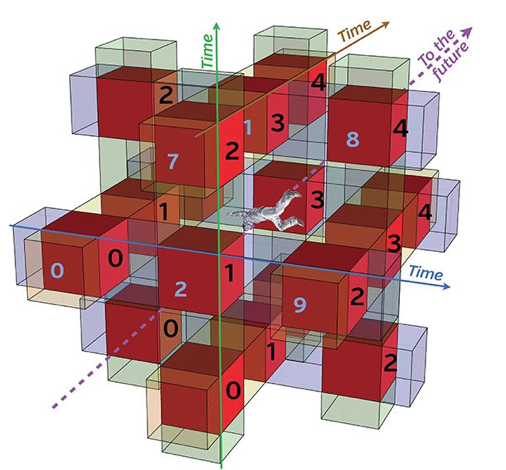
How does the tesseract work?

Kip Thorne’s book goes into tremendous detail about this and describes much better than I can. But this illustration for Thorne’s book helps to show how the tesseract works and how time flows inside it. You can see from the diagram that Cooper can interact with any wall, ceiling, or floor of Murph’s room and access any point in time using the pathways illustrated.

tesseract

How Cooper can move through the tesseract to move through time and how can access any side of Murph’s room.

How did Murph suddenly realize her “ghost” was actually her dad communicating with her?

At the beginning of the film, Murph is a young girl and is startled when her father enters her room while she is looking at books on the floor that were pushed off the shelf by her ghost. Murph says to Cooper, “I thought you were the ghost.” This is a not-so-subtle foreshadowing because Cooper really is Murph’s ghost. Later when Cooper is leaving, he tells Murph, “Once you’re a parent, you’re the ghost of your children’s future.” Another foreshadowing of what will come as future Cooper will communicate back to his daughter as her ghost. The ghost pushes off certain books (such as the encyclopedia’s that spell S-T-A-Y) and also pushes off the Apollo Lander which is another hint from future Cooper to Murph that he is the ghost. Along with these hints, Murph realizes that the only one that could have written S-T-A-Y using the encyclopedias is her father. Above all else, Cooper’s love from the future is felt by Murph and there is an intangible connection across space and time that binds them and gives her the final intuition she needs to realize Cooper is trying to communicate with her. When she sees the watch hand moving in a Morse code pattern, it confirms her suspicion and she is sure at that point.

Why is there so much urgency for Murph to hurry and get in the truck before her brother comes back from the fire she set? While Cooper is in the tesseract, he can move back and forth in the timeline so doesn’t Cooper have all the time they need?

This is a bit of an editing trick. Nolan uses the cuts between these two scenes to raise the tension. If you view both scenes carefully, you will see that both run in real-time. There is no time travel or out of sequence shots here. The audience is experiencing both Cooper and Murph’s stories simultaneously. Considering that we as the audience need to understand both how Cooper is communicating and how Murph is understanding, it seems like this scene does the job of showing both sides. Cooper actually doesn’t need to be in a hurry but it gives the scene much more urgency and interest because he is.

Why doesn’t Cooper care about his son as much as Murph?

From the way the film portrays Cooper’s relationship with his son, it does feel that he favors Murph and has a stronger connection with her. The first question is, why is that wrong? The common belief is that a parent must love their children all the same but many people have grown up with complicated relationships with their parents and favored child issues. So while not admirable, it isn’t unheard of. Second, the film’s focus is on Cooper’s relationship with his daughter so we don’t get to see much of his interaction with his son. He could very well have a great relationship with his son. Much of this may have been mentioned off camera because it wasn’t relevant to the focus on the story of Cooper and Murph.

Why doesn’t Cooper even ask about his son when he sees “old Murph”?

Cooper’s son specifically “lets him go” when Cooper comes back from Miller’s planet (the water planet). This letting go may have contributed to the perceived distance Cooper seems to have towards his son at the end of the film. In addition, several weeks have past since Cooper was picked up (floating in space near Saturn) before he sees “old Murph” so in that time, we would assume it was explained to Cooper what happened to his son. Given that his son and his son’s family were experiencing some kind of coughing sickness, it’s very likely they are all long dead by the time Cooper is picked up.

Why haven’t the humans living in the space station habitats gone to help Amelia Brand with implementing Plan B?

After Cooper’s trip into the black hole, he is next found floating in space around Saturn where a ship sees him and he is picked up. The wormhole is no longer there. The 5th dimensional beings have closed it. There is no obvious solution for humans to find their way back to the system where Amelia is.

Why would the 5th dimensional beings (future humans) have closed the wormhole before humanity could get through?

The 5th dimensional beings are actually the test tube babies that Amelia grows. They evolve at a different rate on Edmond’s planet and their society has evolved in the future to be able to move between dimensions. The purpose of the wormhole being created was so that the Plan B babies could be transported to Edmond’s planet so that the 5th dimensional beings could exist. Once this occurs, there is no need to keep the wormhole open. In fact, the future beings may specifically not want to mix their seed with Earth’s humanity.

Why did “old Murph” tell Cooper to leave and go fall in love with Amelia Brand?

She doesn’t say anything like this. She doesn’t want Cooper (her parent) to see his own child die. She also knows that his heart belongs out exploring. For some reason, this point is brought up often online and is a complete mystery why some believe this. Interstellar is celebrated by many, specifically because it does not force a love story between Amelia Brand and Cooper. Murph doesn’t tell Cooper to go fall in love with Amelia in any way. She knows Brand is alone on the other side of the closed Wormhole and wants Cooper to find Amelia and help her implement Plan B on Edmond’s planet. She knows her father wants to be an explorer among the stars. That’s where his destiny lies.

How did humans build that giant space station habitat that was orbiting at Saturn?

They didn’t build it at Saturn. They flew it from Earth to Saturn. This station was one of several that were shown being built throughout the film. Both Professor Brand and Murph lived in one of them. NASA was building these giant stations on the ground and was counting on Professor Brand solving the gravity equations so that they could use those gravitational anomalies to get the stations into space. When we see the space habitat station at the end of the film, we know the equations have long been solved by Murph. Using the solved equations is how these stations took off from Earth and are now orbiting Saturn.

How does everyone on Earth fit onto that one space habitat orbiting Saturn?

There are several space habitats. We are only shown one but Professor Brand mentions that several were being built before he died and we imagine that many more were created after his death as well. Everyone on Earth is not on a single habitat. For all we know, only a portion of Earth’s people could be saved but with enough habitats, all humans could be accommodated.

Why was Cooper’s farm on the space habitat?

The place Cooper is taken to and stays for a while is not his actual farm. It is a likeness that has been recreated as a memorial to the Cooper family. It has several video monitors which play documentary footage about what the Earth was like before humans left and is used as a kind of museum to educate the people on the space habitat about the important things the Cooper family has done for all of humanity.

How could one woman (Amelia Brand) have given birth to so many babies for Plan B? Why didn’t they take more women with them on the mission to birth the Plan B eggs?

Amelia was never meant to birth the test tube babies. They specifically mention that the Endurance is carrying incubation gear to grow the first 10 babies. After that, those grown up babies will be inseminated to birth more children and within 3 generations, a full species of humans will be populated on the target planet (Edmond’s planet).

Why did Cooper need to steal a ship to go find Amelia Brand?

The wormhole has been closed. His plan to go find Amelia Brand is obviously unauthorized. It’s certainly a personal mission for him. He takes the ship as well as TARS and goes on a mission to try and find Amelia. It is conceivable that he and TARS could use their new knowledge of gravity to help them find a faster way to get to Amelia but the ending is left open for the audience to decide what happens to TARS and Cooper.

Despite some of the issues noted above, Interstellar is a thoroughly entertaining and visually astounding film. I cringe at some of the over-the-top criticism online because it makes me think: “this is why we can’t have nice things.” An ambitious director makes a $160+ million science fiction film (that’s not a remake and not based on a comic book or existing story) and it is thoroughly impressive in many ways and we trash it. I mean, just look at the trailers that played before Interstellar and compare Interstellar to the movies we saw advertised. Compare Interstellar to most of the big-budget science fiction we’ve seen in recent years. It’s great by both measures. I want more science fiction with actual science in it. I want more original stories, not remakes and adaptations. I know there are a lot of other science fiction fans out there that want the same. Are there problems with Interstellar? Yes, of course. No movie is perfect. But it certainly doesn’t deserve some of the harsh criticism it has received online. I had a blast seeing it in IMAX and was filled with wonder at many moments. It reminded me of why I love going to the movies so much.

If you have further insights or an alternative take on something in Interstellar, I’d love to hear your comments below.

Weighing in on the Traditional vs. Self Publishing Debate

November 2, 2014 By Ben Lane Hodson in Books, Writing 3 Comments

Weighing in on the Traditional vs. Self Publishing Debate

Since the Amazon / Hachette negotiations exploded, I’ve been reading increasingly frantic and impassioned arguments from both sides which seem to always devolve into traditional vs. self-publishing and the merits and drawbacks of either. This territory is so heavily covered already that I’m not going to even attempt to go through the myriad of arguments for both sides.

I see pro’s and con’s to both traditional and self-publishing. What interested me is that some of the arguments from the pro-traditional publishing crowd or even publishers themselves haven’t been as compelling as some of the arguments I’ve read from the self-publishing stalwarts.

A friend of mine who is very pro-traditional sent me an article this past week that had some interesting thoughts on some of the benefits of traditional. You can read the article here:

Save the Book Publisher by Guan Yang of Bloomberg.

I want to respond to a few points he made in the article that struck me as a bit weak and if anyone has some better arguments or an alternate take, I’m definitely interested in hearing your thoughts:

A lot of work goes into editing a manuscript – Guan’s point is that it takes a lot of time and money to get a manuscript edited but if you look at the real costs, you can get a typical 80,000 word novel professionally edited for under $2,500 dollars. Considering how much money the author stands to make if they published the novel themselves and properly marketed it, that’s seems very, very low an amount for the author to consider giving up most all of their rights to the book and property to a publisher as well as most profits.

Publisher advances make it possible for writers to survive – I totally agree that in the good old days of traditional publishing when advances were $25k, $50k, even over $100k, they made a huge difference for an author. But now that advances are being phased out by many publishers and others are only paying a measly $3,000, it makes this argument pretty weak. It seems like more and more, traditional publishers are trying to pass on as much risk as possible to the author and reduced advances are a big part of that.

Books are start-ups – this is a great point and totally true. Each new book is like creating a little mini-company, marketing the product, building a revenue stream, and milking it as long as possible. This takes tremendous risk and effort and traditional publishers have a lot of experience building this type of company.

Traditional publishers are doing a poor job competing with Amazon – this is so true. Why haven’t traditional publishers created an online source to purchase books that’s as good as Amazon? The whole reason Hachette is in such a bad negotiating position is because they have no alternative options for selling books to use as leverage.

Self-published authors are stuck doing all their own marketing – this is true and is described as a huge drawback for self-publishing. There are a lot of authors I know that don’t want anything to do with marketing. I totally get where they are coming from. I would love to “just write” too but from what I’m seeing in the changing landscape of publishing, even traditionals are forcing their authors to do marketing, having social media profiles, etc. So it may be unavailable regardless of how you publish.

Traditional publishers do a poor job of marketing books – Yep, this one’s true too. It seems they have very few ideas for how to market new books and new authors and it’s proven by how poorly 90% of new books do in the market.

There’s no benefit to eliminating publishers completely – Ya, agree on this. Just because self-publishing has become a viable option and attractive to many authors doesn’t mean traditional publishers can’t play a valuable role as another option. There will be more changes to come and traditionals may work much differently than they do today as they adapt to the changing marketplace but there are still several benefits to having traditional publishing as an option for many authors.

I totally agree with Guan that in self-publishing, the writer is stuck footing the bill for editing, cover design, and printing expenses. The traditional publisher instead asks that for taking that financial risk, they get a majority of profits and rights to the author’s book. The big question: Is what they are offering in return worth giving up everything to them? That’s the question each author needs to wrestle with and decide what makes most sense for themselves. I’d say if the contract value is worth giving up rights and profits, then go for it. If not, then self-publishing is an interesting alternative.

One thing seems for sure, with all of these options and choices for authors, now is such a cool time to be a writer!

10 Fun Halloween Movies

October 30, 2014 By Ben Lane Hodson in Movies 1 Comment

I love a good scare but I’m fully aware that there’s a good group of people out there that hate getting scared and would rather spend their Halloween night laughing instead of screaming. Here’s my list of favorite Halloween movies that are actually fun instead of terrifying:

shaun

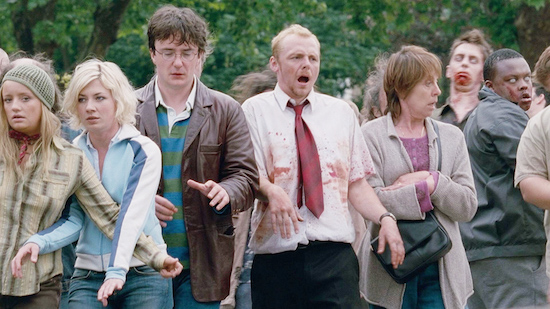
10) Shaun of the Dead (2004)

Take the Zombie genre and lampoon it at the same time that you pay tribute to it. Oh, and wrap it all up in a hilarious social commentary. This movie is so smart and so fun.

monstersquad

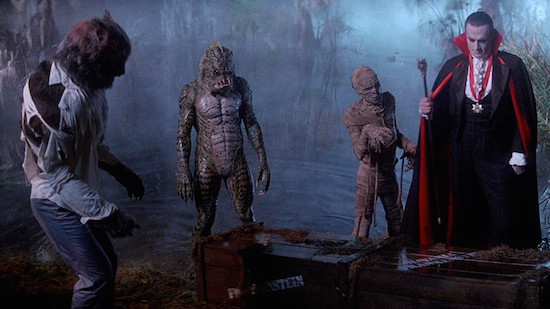
9) The Monster Squad (1987)

Billed as a kids movie, this film could only be made in the 80’s with all kinds of non-kid-appropriate themes and scares but for adults, especially fans of 80’s movies, this movie is a blast. Throw in that it was written by Shane Black who wrote/directed Iron Man 3 and wrote the Lethal Weapon movies.

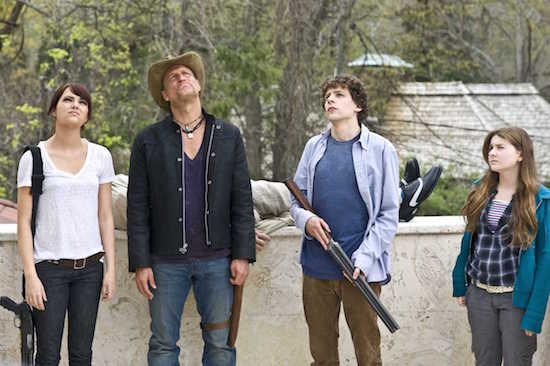
zombieland

8) Zombieland (2009)

A wacky zombie comedy that is basically the opposite of The Walking Dead in terms of seriousness. One of the best surprise cameos at the end as well.

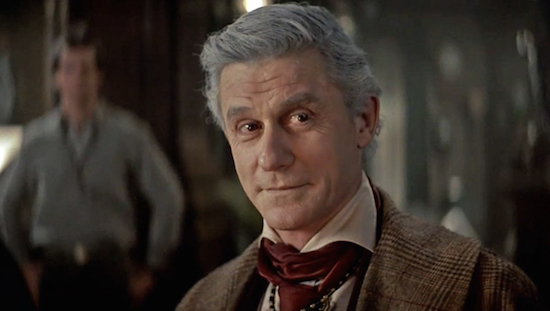
frightnight8603

7) Fright Night (1985)

There’s some scares in this one but there are some big laughs as well. Strikes a great balance between terrifying and hilarious. Look for brilliant performances from both Chris Sarandon (Prince Humperdinck in The Princess Bride) and Roddy McDowall (Cornelius in Planet of the Apes).

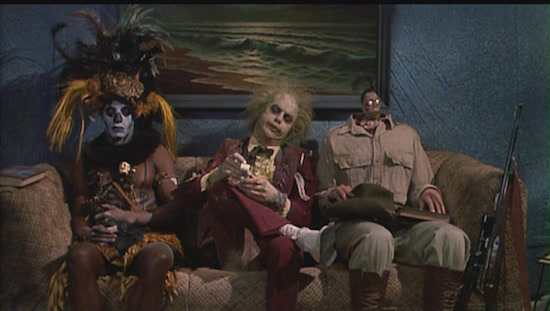
beetlejuice

6) Beetlejuice (1988)

Michael Keaton needs to be in more movies. His performance as Beetlejuice is one of the ages. Tim Burton struck gold with this bizarre film that’s as weird as it is fun.

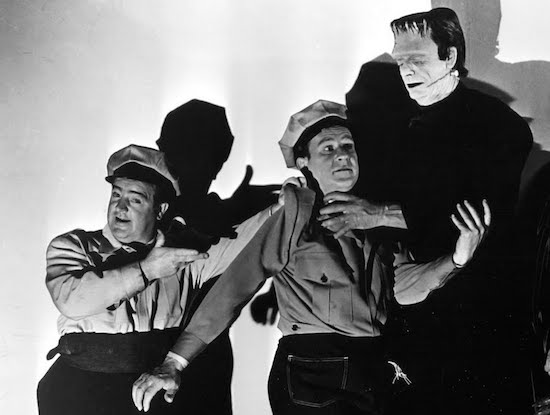
abbott-costello-frankenstein

5) Abbott And Costello Meet Frankenstein (1948)

Abbott and Costello bring the laughs to a genre that even in 1948 was overdone and make this film a joy to watch.

armyofdarkness

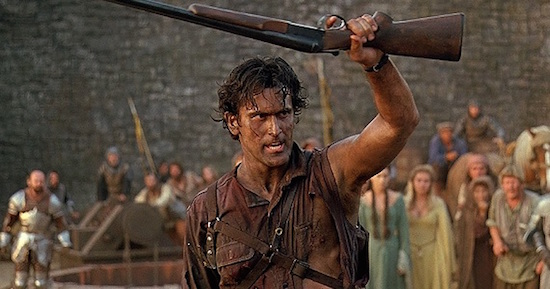
4) Army of Darkness (1992)

The Sam Raimi of the late 1980’s and early 90’s was still in his absolute creative prime and this film brings all of his camera tricks, tropes, and cleverness into one. So many quotable lines. Owes as much to The Three Stooges as it does to classic horror.

ghostbusters

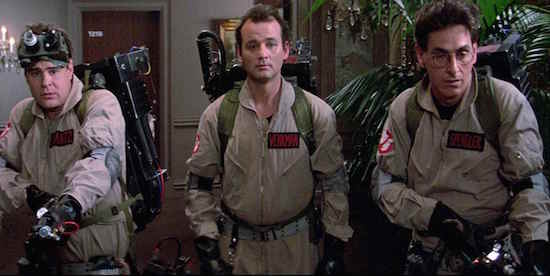
3) Ghostbusters (1986)

One of the best comedy scripts ever written. The recent re-release to theaters showed how well this film has aged. Absolute classic on every level.

YoungFrankenstein3

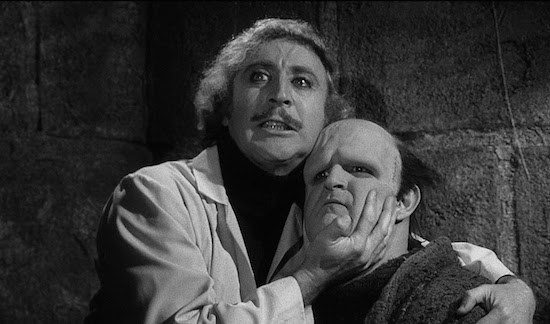
2) Young Frankenstein (1974)

My personal favorite Mel Brooks film. So many sight gags, plays on words, and clever comedy tricks. This is what comedy used to be like before it devolved into crass gross-out humor.

theburbs

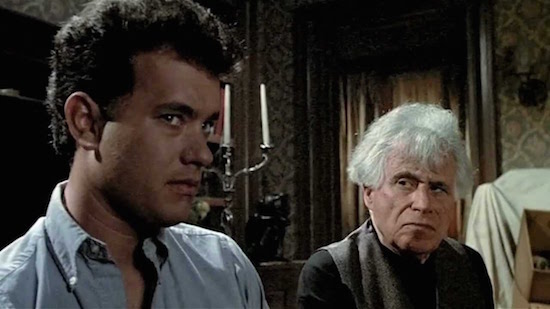
1) The Burbs (1989)

This film is so underrated. Directed by Joe Dante (Gremlins, Innerspace, The Howling), Dante knows how to combine horror and comedy. Tom Hanks is awesomely over the top in this along with a fabulous supporting cast including Carrie Fisher (Princess Leia), Bruce Dern (only man to kill John Wayne on film), and Corey Feldman (Mouth in The Goonies).

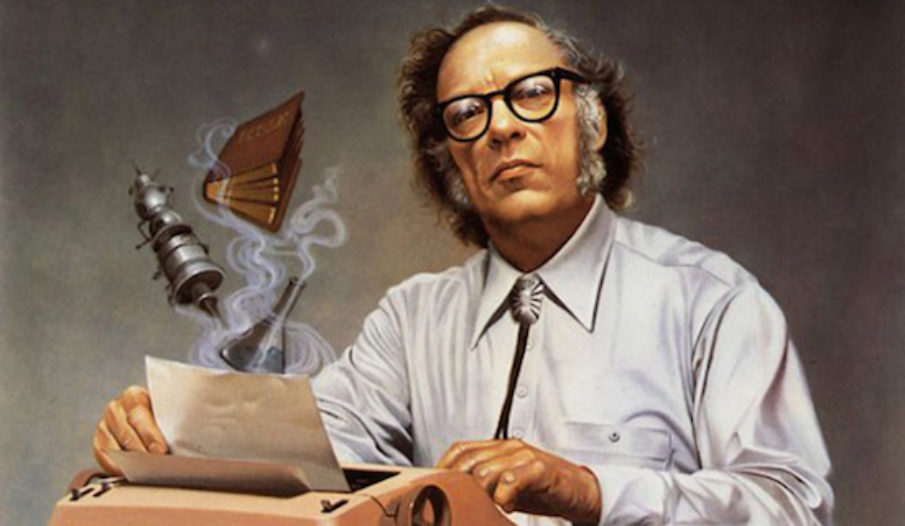
Isaac Asimov’s Long Lost Essay on Creativity

October 27, 2014 By Ben Lane Hodson in Life Lessons, Tips & Tricks, Writing

Isaac Asimov’s Long Lost Essay on Creativity

Asimov’s writing had a big impact on my young reading life. His Foundation Trilogy was the first science fiction series I really fell in love with. I was captivated by the high concept, 10,000+ year spanning story and clever plot twists. His I, Robot series (don’t see the movie, read the book) was excellent as well. In college, I moved from Asimov’s fiction to reading his work on explaining Physics and still to this day, use many examples from his book as a way to illustrate principles in physics.

So when I heard this past week that a lost essay, written by Asimov, had been found and published online, I jumped at the chance to read it. Arthur Obermayer, a colleague of Asimov’s found this essay in which Asimov describes his thoughts on creativity, where it comes from, and how to develop it.

You can read the full essay here:

http://www.technologyreview.com/view/531911/isaac-asimov-asks-how-do-people-get-new-ideas/

A few of the takeaways I thought were most interesting:

Where Creativity Comes From – Although it was unclear to Asimov where the creative spark came from, he developed an ingenious method for deducing how we might discover the similarities between creative ideas and people. He uses Darwin and Alfred Wallace as an example of two independent people, not working together or communicating, who both came up with a similar idea at roughly the same time.

 Attributes of a Creative Person – Someone who truly has unique and radically creative ideas must be very self-assured. They must be willing to defy authority. They must have a personality that Asimov calls “eccentric” but I think he means they need to dare to be different. He also added that isolation was a factor that really helped him with his creativity.

How to Foster Creativity – This paper was written for a government institution but could be substituted for a corporation or just your own creativity. The single biggest factor to promote creativity was to NOT pay for it. Organizations should pay for the employee’s menial tasks but creativity should all be for free. This can apply to even your own creativity by never approaching a project just to make money on it. The creativity flows best when money is NOT the primary driver.

It’s a quick and interesting read that gives some great insight into how Asimov reasoned through things and his clear and concise writing style.

Open Letter to Comic Con Attendees

October 20, 2014 By Ben Lane Hodson in Comics, Tips & Tricks 2 Comments

Open Letter to Comic Con Attendees

Having been to a bunch of comic cons in different states and with all kinds of people from around the world, I’ve noticed a few things that could make Salt Lake Comic Con even better and help, especially newer attendees, to really get the most out of comic con.

Attendees new to comics

“I don’t really read comics” was a common phrase I heard a lot of people say. Many have been introduced to comic characters through the popular Marvel and DC movies and that’s great! What I’m hoping is that now that you’ve realized you like Captain America or Batman or Black Widow, come take a look at some of the comics, see where it all started, read some of their excellent, classic and modern, stories. I’ll try and put together a blog post soon that gives some ideas on where to get started reading comics.

And if you are just there for the TV and movie celebrities, that’s great too. Just remember that a good portion of those TV and movies are actually based on a comic or graphic novel. And those comics and graphic novels in many cases are even better than the shows so it’s worth checking out a few and dipping your toe in the comic water. There really are some amazing comics & stories out there to be discovered.

Buy Comics

Once you’ve found out how awesome reading comics is, buy some! I counted only seven vendors in the entire artist alley that were selling comics (that’s a very low amount compared to most Con’s I’ve been to) but that’s okay. What was a little disturbing when I talked to these comic vendors (some with some really interesting independent ideas/stories and great comic art) was how poorly they were selling. No one was buying comics! Along with that cool Thor print you have your eye on, maybe drop a couple of bucks on an original comic story next time. You just might read the next big thing before anyone else has even heard of it.

Strollers are not compatible with Comic Con

Hopefully most parents that brought strollers realized after a day of fighting the packed crowds that strollers and comic cons are not very compatible. I saw too many strollers blocking crowd paths and running over toes and into heels. I saw a lot of frustrated stroller drivers. Try a baby backpack instead. The more floor space you can give to crowd movement, the better off everyone will be.

Be patient with staff

99% of the staff helping to run the con are volunteers. They usually volunteer to get a free pass to the show since they are fans themselves. So before you rage against the staff machine, consider taking a deep breath and remembering they are fans too, under a lot of pressure, over-worked, underpaid, and usually hungry and tired. Go easy and remember that everyone is doing their best to make the experience a great one for all attendees.

Remember kids attend also

When considering if you should cosplay with little-to-no costume, consider there are also young kids attending the show as well. Unfortunately, comics have a history of objectifying women so sometimes it can be hard, especially for women, to find a female superhero who actually wore more than just a metal bra and panties but see what you can make do with because there are a lot of kids that attend the show as well. In addition, any artists who are painting sexually-charged nudes, hardcore violence, or sex, throw a few post-its up to do a little censoring for the kids.

Comic Con is an amazing experience and most that attend for the first time can’t wait to come back the next year. And it can be even better.

Update on Tales of the Macabre West

September 18, 2014 By Ben Lane Hodson in Books, Tales of the Macabre West 2 Comments

Update on Tales of the Macabre West

Tales of the Macabre West is nearly published. We are in the home stretch. Right now, it looks like the official publish date of my first book will be sometime in October 2014 (just weeks away)!

I want to first thank my Beta Readers. Their feedback improved the book in some fabulous ways and their comments really made me push to do my best work yet.

In terms of the nuts & bolts, here’s where things are at. The book has been through final copy editing and the text is now locked down for printing.

What still needs to get done?

There are couple of last items that need to get completed:

Back cover design – I will post a cover reveal soon for the front cover but there is still some work to be done on the back cover layout and book blurb.

Print & eBook layout – fonts, margins, chapter markers, and layout details have to be finalized for both the print and eBook versions.

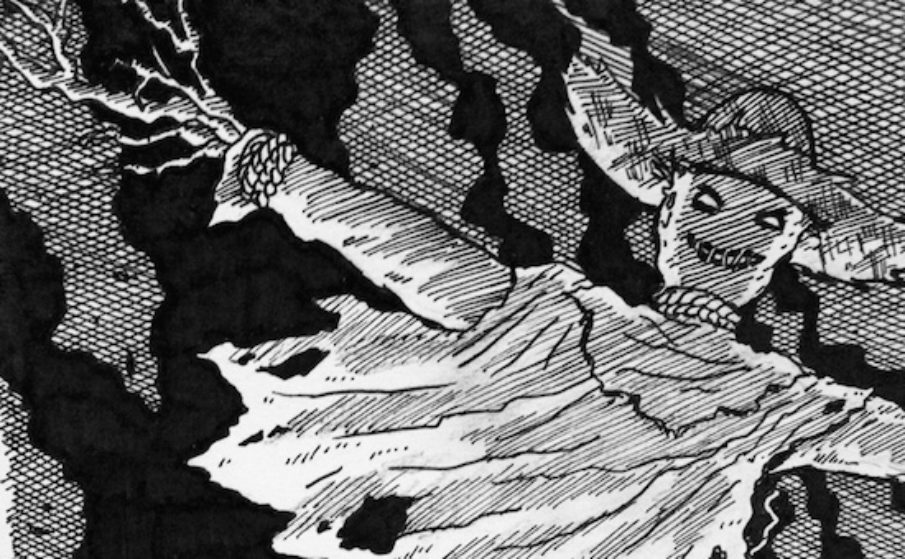
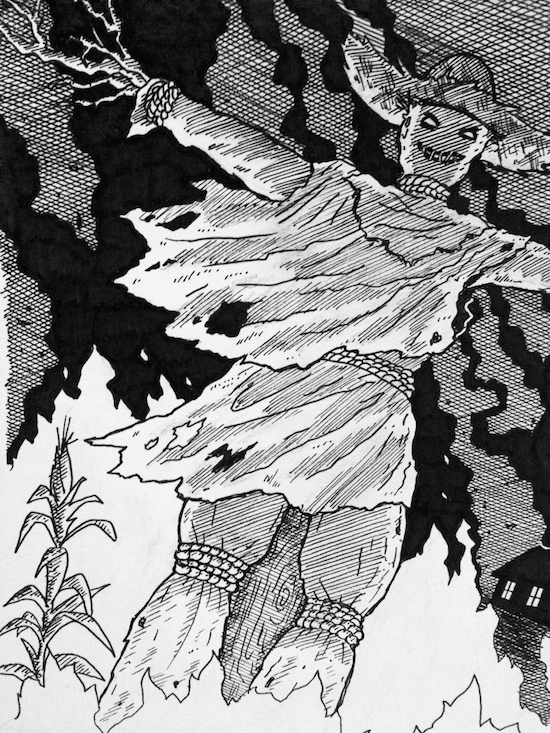
Illustrations – my talented brother, Bryant Hodson is doing illustrations for each of the five stories in the book. There’s still some last work to be done on those illustrations. Here’s a sneak-peek at the amazing illustration for “The Scarecrow” story.

Illustration of "The Scarecrow" story in Tales of the Macabre West

Illustration of “The Scarecrow” story in Tales of the Macabre West

All told, it’s getting close and I couldn’t be happier with how Tales of the Macabre West is turning out!

«< 30 31 32 33 34 >»

About Ben

Ben Lane HodsonWriter, comic book creator, filmmaker, musician, entrepreneur, cook, software developer, hiker, surfer, & rock climber. Ben is the author of the Blood & Glory, Shutter, 8-Bit, and Bukeey comic book series. His new book, Tales of the Macabre West was published in December 2014.

Follow Me

Latest Book


My short story Little Bundle of Death was published in this anthology. Available in both paperback and eBook.
Buy it on Amazon.com

Ben’s Instagram

Recent Posts

  • Walking with the Dead: The Cinematic History of Zombies
  • My Experience using a Pebble Watch
  • Panel Schedule for Salt Lake Comic Con 2016
  • Supergirl: The Panel
  • The Slasher Craze of the 1980’s
Ben Lane Hodson
© Ben Lane Hodson 2026
Powered by WordPress • Themify WordPress Themes

↑ Back to top